

Search for micro saas ideas and the same advice comes back every time: pick an underserved niche, give it a memorable name, ship a landing page. That order is backwards. A name costs nothing and proves nothing, while one verified number can decide whether a stranger opens their wallet.
The distribution of outcomes among small software businesses explains why. The median profitable micro-SaaS business reaches roughly $4,200 in monthly recurring revenue, according to Freemius's state of micro-SaaS analysis. That's a real business and a modest one, reachable with a few dozen customers paying a fair price. The fastest route isn't the biggest idea, it's the idea whose demand you can demonstrate in weeks.
Solo founders drift toward smaller markets for control and low support load, the usual explanation for why solo founders choose smaller businesses. The useful side effect is proof speed: fewer buyers to find, shorter sales cycles, and a customer list you can phone yourself.
So this list ranks on a different axis. Each entry names the buyer, the quickest honest evidence that they'll pay, the build complexity, and the one traction metric worth publishing from week one. Ten ideas, short enough to scan, specific enough to start this month.
Table of Contents
- 1. Stripe Revenue Analytics Dashboard (MRR Tracker)
- 2. Developer Activity and Commit Insights Dashboard
- 3. Pre-Launch Waitlist and Demand Validation Page
- 4. Public Product Roadmap and Feedback Board
- 5. Open-Source Sponsorship and Funding Platform
- 6. Reward-Based Crowdfunding Platform for Software Products
- 7. Digital Product Checkout and Licensing Tool
- 8. Investor and Backer Update Newsletter Tool
- 9. Verified-Revenue Startup Marketplace
- 10. Startup Launch Directory and Discovery Platform
- How the 10 micro SaaS ideas compare at a glance
- Pick the Idea You Can Prove Fastest
1. Stripe Revenue Analytics Dashboard (MRR Tracker)
Stripe already stores the number. A verified MRR figure is the most persuasive asset a SaaS founder owns, because a backer can check it at the source. A dashboard that reads Stripe and publishes it turns bookkeeping into a credibility layer.
The flow in use is short. A founder connects a read-only Stripe key. The tool pulls subscriptions, refunds, and currency conversions, then renders MRR, churn, net revenue retention, and customer lifetime value on a page anyone can visit. Build complexity sits in those conversions and refunds, not in drawing another chart.

The buyer is another solo founder or a two-person team who will not pay for an enterprise analytics seat. Plenty of independent products have only a handful of paying customers. That is still revenue worth showing, and it is not a reporting stack worth buying.
Baremetrics built a durable product on the Stripe-first wedge. ChartMogul widened it into multi-source subscription analytics, and Stripe's own Billing and Revenue Recognition features keep absorbing the basics. I would not compete on feature count. A new entrant wins on speed and a page a stranger can open, which is the practical cut against heavier SaaS metrics software that stays inside private charts.
The metric to publish from week one
Start with MRR and monthly churn only. Add cohorts and lifetime value once both are stable, or you ship a dashboard nobody trusts.
- Handle multi-currency and refunds explicitly: a wrong conversion rate destroys the credibility the product exists to create.
- Request read-only keys and say why: founders hand over Stripe access only when the scope is obvious in one sentence.
- Ship a public verified-revenue badge: founders display it, other founders ask what it is, and distribution becomes part of the product.
The quickest honest evidence that someone will pay is a founder who pastes that live page into a pitch instead of a screenshot.
2. Developer Activity and Commit Insights Dashboard
The first question a technical backer asks is rarely about revenue. It's whether the thing is still being built. A dashboard that pulls commits, merged pull requests, release cadence, and contributor counts from GitHub answers it with a link.
The customer is the solo developer, small team, or open-source maintainer who needs to show steady shipping instead of a heroic weekend. AI assistance has made raw output harder to read as a signal, and the survey data shows how normal the tooling has become: Stack Overflow's 2025 Developer Survey found 84% of respondents were using or planning to use AI tools in development, up from 76% a year earlier. Volume rises for everyone, so consistency is what's left to measure.
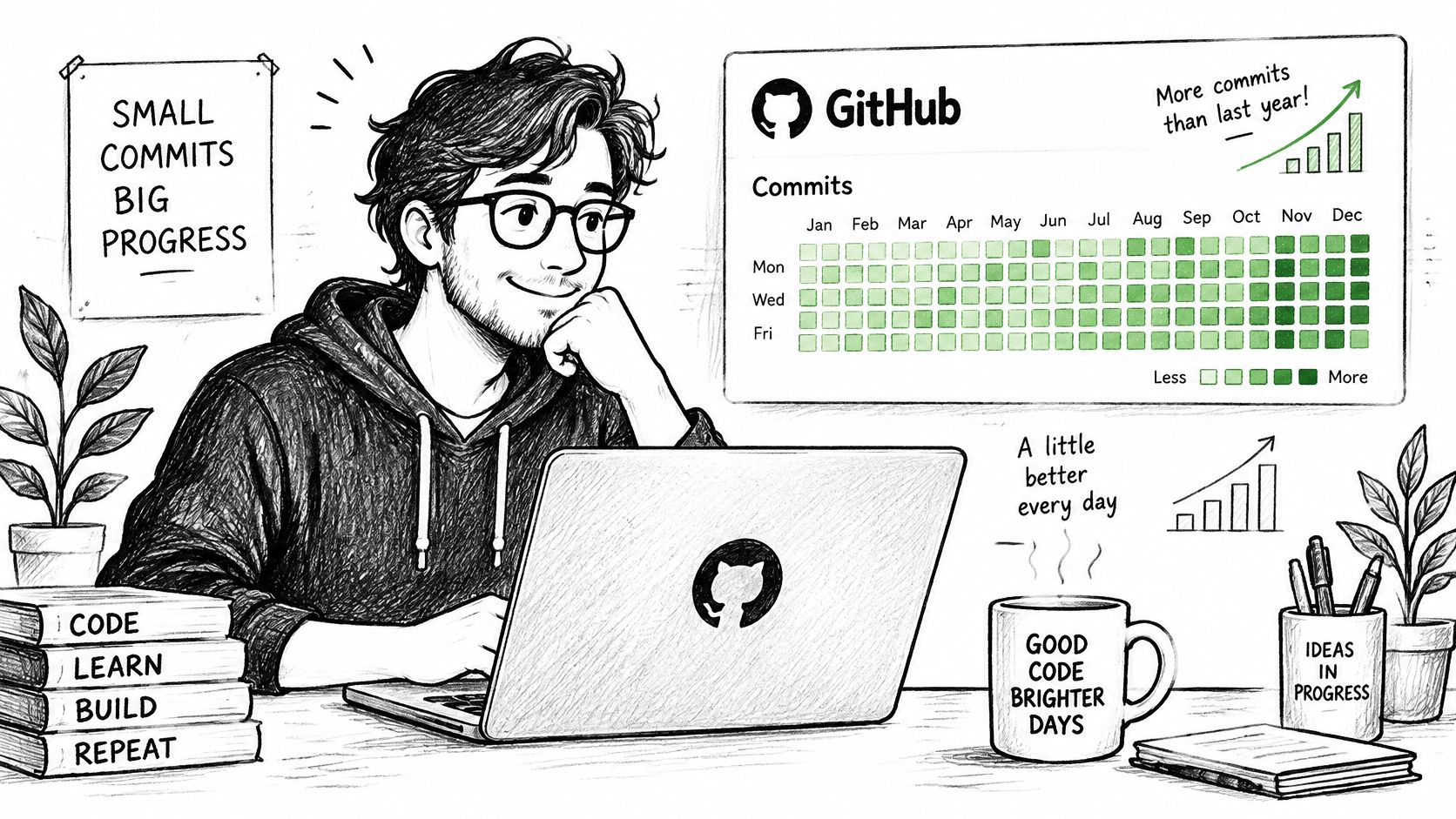
Existing options split by audience. Shields.io gives anyone embeddable badges. WakaTime tracks individual coding time and is widely used by solo developers. Waydev and LinearB sell engineering analytics to managers with headcount. The unserved middle is a public, shareable, one-page activity record for teams of one to five.
Making the numbers hard to inflate
- Normalize to weekly active days: total commits reward noisy work, days with at least one commit reward habit.
- Request the minimum GitHub scopes and explain them: maintainers read scope lists before they click approve.
- Show trend lines, not totals: a chart that dips in a holiday week is honest, and honesty is the product.
- Pair commits with release notes: shipped features beat activity whenever anyone checks what a project actually delivered.
A commit graph that only ever rises tells a backer nothing. One that dips and recovers tells them you're a person with a schedule.
3. Pre-Launch Waitlist and Demand Validation Page
A waitlist on its own is the weakest proof in the toolkit. It costs a visitor an email address, it costs you the illusion of traction, and plenty of founders have launched to 2,000 signups and three buyers. What's worth building is a validation page that captures intent with a number attached.
Concretely, that means a hosted page with referral tracking, one qualifying question asking what the visitor expects to pay or which job they're hiring the product for, and a discounted pre-order checkout. Two metrics matter: visitor to signup, and signup to paid.
Timing cuts against lazy launches. Small businesses delay software purchases when configuration and staff training get in the way, even while the wider category expands, as the SMB software market research tracks. A niche with no budget owner and heavy onboarding friction looks attractive in a spreadsheet and stalls in reality.

Viral Loops handles referral mechanics, Carrd covers the one-page site most founders need, and Launchlist keeps the pre-launch flow narrow. Choose based on the export, because signups without timestamps can't prove momentum, and validating a digital product idea with paid betas is a different exercise from collecting email addresses.
Four rules that separate proof from theatre
- Ask the expected price: treat answers as segments, never as promises.
- Track visitor to signup rate: a 2% page and an 8% page are different products.
- Sell pre-orders at a discount: ten paid pre-orders outrank a thousand maybes.
- Stamp every signup with a date: momentum you can't date is a claim, not evidence.
4. Public Product Roadmap and Feedback Board
Buyers abandon quiet products. Organizations ran an average of 106 different SaaS tools in 2025, according to BetterCloud's State of SaaS 2025 report, which means every subscription competes at renewal against a stack that's already too large. A public roadmap is retention work wearing marketing clothes.
The product is a hosted board where users submit requests, vote, and watch status move from planned to shipped. The buyer is the founder who needs a visible answer to "is anyone home," usually after losing a customer to silence.
Canny owns the category for product teams with budget. Featurebase bundles feedback, roadmap, and changelog in one place. Upvoty stays deliberately lighter and cheaper, which is the opening for a new entrant.
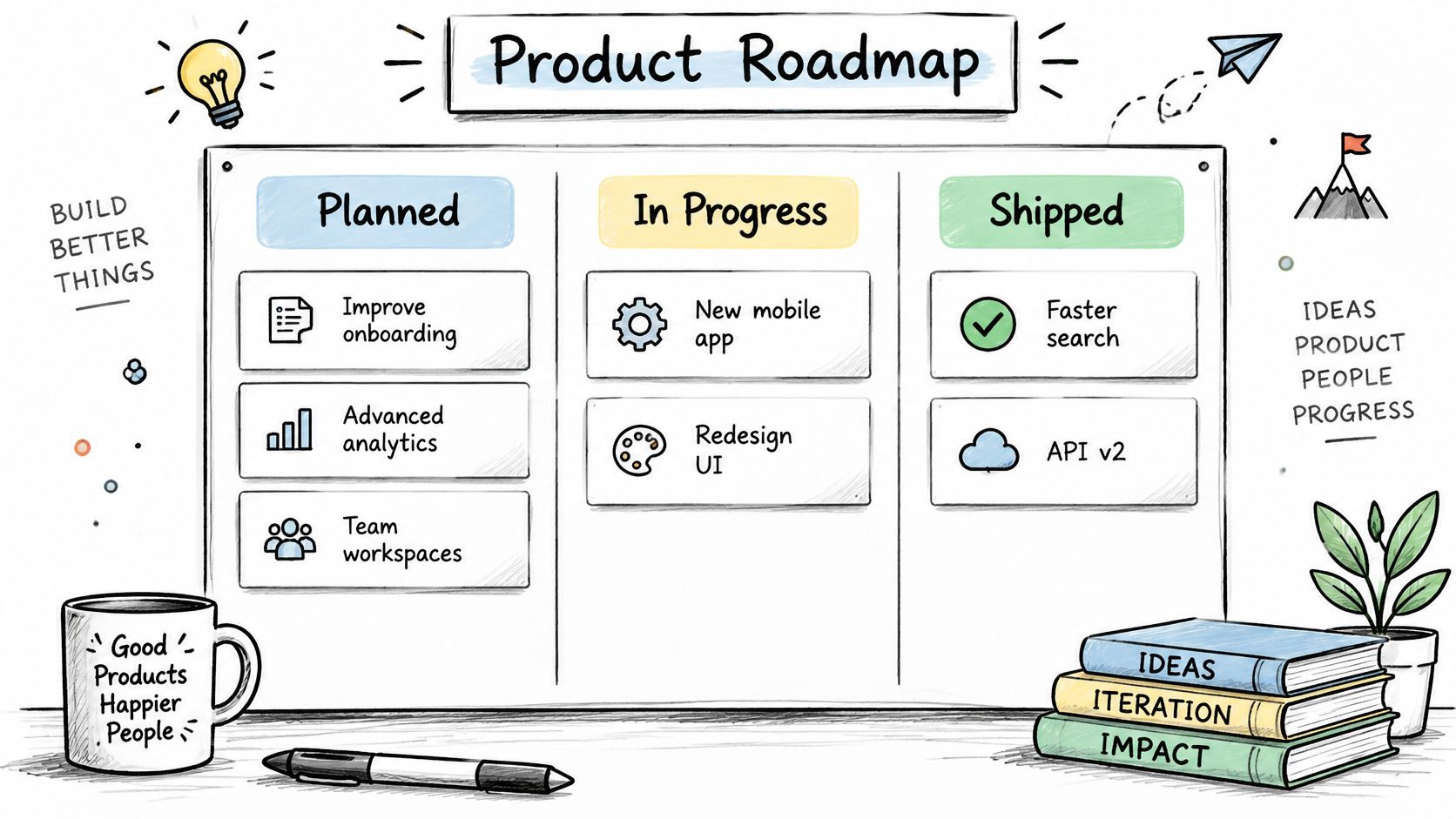
Rules that keep a board honest
- Verify accounts before counting votes: unverified boards attract ballot stuffing and lose their value as demand data.
- Publish a changelog weekly: a shipping record outranks a voting record.
- Close the loop on shipped items: link each one to the release note that delivered it.
- Tie items to a metric: "faster onboarding, measured by activation" is a plan, "dark mode" is a wish.
The roadmap isn't a promise list. It's a record of what you heard and what you did next, and backers check the second half.
5. Open-Source Sponsorship and Funding Platform
Maintainers of widely used libraries often earn nothing from the companies that depend on them, and the engineer who'd happily approve a monthly sponsorship has no clean way to pay. A funding platform built around GitHub profiles, tiered perks, and public goals serves a paying need rather than a charitable one.
The customer is the maintainer with enterprise users in their dependency graph, plus the engineer inside a company who can approve a small recurring charge without a procurement fight. Both sides need the same thing: a page that survives a finance review.
GitHub Sponsors routes money through the platform developers already live in. Open Collective publishes budgets and expenses, which matters to sponsors who need receipts. Polar.sh targets developers who want monetization tooling rather than a donate button. The differentiator for a new entrant is the reporting layer, because sponsors renew when they can see what their money shipped.
Structure that earns renewals
- Tie tiers to outcomes: priority triage, roadmap votes, or a named release beat a shout-out in a README.
- Publish a transparency report monthly: income in, work out, with links to merged pull requests.
- Attach goals to milestones: "version two ships at this number" converts better than an open-ended target.
- Route payments with Stripe Connect: direct payouts keep the money flow legible to both sides.
Practical rule: if a sponsor can't explain your funding page to their finance team in one sentence, the page isn't finished.
The open-source monetization conversation has moved past whether maintainers should charge and onto how to make the payment legible, which is the actual product problem here.
6. Reward-Based Crowdfunding Platform for Software Products
A few thousand dollars of pre-sales does not need an equity round. Reward-based crowdfunding sells lifetime licenses, early access, and founder credits to people who already want the product. The customer is a builder with a working demo and a list of a few hundred: enough to fund a first version, not enough for a venture round.
Technology startups accounted for 41.3% of equity-crowdfunding campaigns in 2025, according to DataIntelo's product crowdfunding market report. That share is equity. The reward-based version is a different product, and a better fit for a solo founder who doesn't want to sell a slice of the company for pre-orders.
Kickstarter set the page backers expect. Indiegogo offers flexible funding when a campaign misses an all-or-nothing bar. AppSumo runs lifetime-deal launches that work as distribution, not as fundraisers. Position against those three, not against a bank.
From day one, track a number a stranger can recheck: paid pre-orders against your own list, or live revenue if the product already charges. A five-figure goal on 300 subscribers is theatre. A lifetime deal is a multi-year support bill, and one heavy user can erase the margin. Cost out license keys, onboarding, and delivery dates before the page goes live. Those are the lines founders underprice.
A SaaS crowdfunding platform holds up only when backers can check the numbers in the pitch. Live traction next to the ask is extra context, not a guarantee the product ships or that the numbers hold.
7. Digital Product Checkout and Licensing Tool
Selling courses, templates, licenses, or AI tool access looks like a solved problem until you price the margin. One analysis of the micro-SaaS trend puts gross margins for AI-wrapper products at roughly 25% to 35%, against 70% to 85% for traditional SaaS, because inference runs on every request. If you sell access to an AI tool, checkout fees and usage costs decide whether the business survives its own growth.
The buyer is the creator with an audience and no infrastructure: an afternoon of setup, hosted checkout, automatic delivery, license keys, tax handled, done. Gumroad is the default fast start. Lemon Squeezy acts as merchant of record for digital products. Stan focuses on creator and course sales.
Choosing between them
- Compare total fees including tax handling: merchant-of-record status costs more per sale and saves you VAT registration.
- Use license keys with activation limits: unlimited keys on a desktop app become a piracy channel.
- Offer a sample or free tier: purchase friction is highest on the first transaction.
- Pipe sales events into Stripe: verified revenue belongs on the same page as the product.
Charge for the outcome, not the tokens. Usage pricing on an AI product hands your cost volatility to a customer who can't forecast it either.
8. Investor and Backer Update Newsletter Tool
Most founders send updates when something good happens, so backers hear from them twice a year and forget the project in between. A tool that turns the monthly update into a ten-minute job changes that pattern, and it changes how much support arrives between rounds.
The customer is the founder with 20 to 200 backers or angels who wants a consistent record without learning an email platform. Beehiiv fits creators and startups, Substack carries an audience built in, and Buttondown stays plain text, which is why developers like it.
The update format that works
- Fix the schedule: first Monday of the month, same time, no exceptions.
- One headline metric, one win, one problem: the problem is what makes the rest believable.
- Link the live traction page every time: readers who can check the number stop asking for updates.
- Archive publicly: a year of updates is a diligence file that saves weeks later.
The build itself is modest, so difficulty sits in the format and the export, not the stack. Templates that pull a metric from a Stripe connection and render it inline are the feature people pay for, because copy-pasting numbers is where updates die.
A backer who reads twelve honest updates will forgive a flat quarter. A backer who reads two will assume the worst.
9. Verified-Revenue Startup Marketplace
Many listings state revenue without giving buyers a way to check it, which is why deals often stall in due diligence. Buying a small software business is a realistic exit for a solo founder, and trust is the bottleneck.
The buyer has $20,000 to $200,000 to deploy and no appetite for spreadsheet archaeology. Supply runs deep. Small businesses averaged 73 SaaS applications in 2025, up from 40 in 2021, according to BetterCloud's State of SaaS data as reported by Stealth Agents. A stack that deep is assembled from thousands of small vendors, and some of those vendors are for sale.
Acquire.com covers startup acquisitions, Flippa covers the long tail, and MicroAcquire went after software specifically. Build the verification layer behind the listing. I rank this idea slower to prove than a one-product tool, because both sides have to show up. The day-one traction metric is listings with a live, dated revenue connection, not signups.
Verification is the product
- Narrow the niche first: B2B SaaS under a set MRR threshold beats a general marketplace.
- Require live Stripe connections: self-reported figures and screenshots are where fraud lives.
- Stamp every badge with a sync date: stale verification is worse than none.
- Standardize the comparison metrics: MRR, churn, customer concentration, and traffic in the same order on every listing.
10. Startup Launch Directory and Discovery Platform
Directories are unglamorous and they compound. A launch site with category pages, upvotes, and review threads earns attention from makers on the day they need it most, then keeps earning from search traffic for years.
The market is big enough that a narrow slice is a business. The global SaaS market was valued at about $408.21 billion in 2025 in Radixweb's SaaS statistics roundup, which also notes that estimates differ because analysts carve the category differently. A directory doesn't need a share of that number. It needs a few thousand makers launching each year and a reason to come back.
Product Hunt owns launch day, BetaList serves pre-launch listings, and Indie Hackers built a community where founders post revenue openly. The gap is a directory that treats verified traction as the listing itself.
What separates a live directory from a ghost town
- Pick one category and own it: AI tools, developer tools, or education products, never everything.
- Prepare assets before launch day: tagline, demo, and screenshots decide the outcome.
- Answer comments in the first hours: early engagement drives ranking on every platform.
- Link listings to verified traction: a page with a live MRR chart is worth reading, a screenshot isn't.
Sensible SaaS directory monetization strategies start with paid featured placement and category sponsorship, not with charging makers to list at all.
How the 10 micro SaaS ideas compare at a glance
| Item | Core Features | Main Advantage | Main Drawback |
|---|---|---|---|
| Stripe Revenue Analytics Dashboard (MRR Tracker) | Stripe integration; MRR, ARR, churn, and cohort metrics; shareable dashboards and alerts | Provides reliable, verifiable revenue data for traction pages | Crowded market; accuracy depends on Stripe setup, and founders may hesitate to share revenue |
| Developer Activity and Commit Insights Dashboard | GitHub integration; commit, pull request, and release summaries; activity badges and team insights | Makes development progress easy to demonstrate and verify | Commit counts can be gamed, and private repository access raises trust concerns |
| Pre-Launch Waitlist and Demand Validation Page | Landing pages, email capture, referrals, surveys, and signup analytics | Quick to set up and provides an accessible early demand signal | Waitlist counts can be vanity metrics; ongoing marketing is needed |
| Public Product Roadmap and Feedback Board | Feature requests and voting; roadmap stages; changelogs and integrations | Builds transparency and helps prioritize development | Requires active maintenance; votes can be manipulated, and the market is crowded |
| Open-Source Sponsorship and Funding Platform | GitHub-linked profiles; sponsorship tiers; funding goals, perks, and payout tools | Directly supports open-source maintainers with recurring funding | Fees reduce margins, funding is concentrated among popular projects, and trust is essential |
| Reward-Based Crowdfunding Platform for Software Products | Campaign pages, reward tiers, pledge management, updates, and early-access offers | Raises funds without equity dilution while validating demand | Success is uncertain and marketing, fulfillment, and platform fees can be substantial |
| Digital Product Checkout and Licensing Tool | Hosted checkout; automated delivery and license keys; subscriptions, taxes, and affiliates | Lets creators start selling quickly without development work | Fees and platform dependence; piracy and license sharing are difficult to control |
| Investor and Backer Update Newsletter Tool | Newsletter editor, embedded metrics, audience segments, scheduling, and public archives | Keeps supporters engaged and creates a lasting progress record | Consistent publishing takes time, and metric integrations must be reliable |
| Verified-Revenue Startup Marketplace | Verified revenue and traffic listings; buyer search; deal and due-diligence tools | Builds trust in business sales through connected, verifiable data | Legal and compliance needs, two-sided marketplace growth, and high complexity |
| Startup Launch Directory and Discovery Platform | Product listings, launch rankings, categories, maker profiles, and featured placements | Delivers early visibility and community engagement for new products | Upvotes can be gamed, visibility may fade quickly, and discovery is competitive |
Pick the Idea You Can Prove Fastest
Ten ideas sit above, and only one of them fits your skills, your audience, and your patience for support tickets. Choose that one, then do the thing most lists skip: define the single metric that would convince a stranger to pay, and put it in public this month.
The ranking logic isn't about which product is biggest. It's about which proof arrives soonest. A Stripe dashboard shows verified MRR the day the first customer pays. A commit dashboard shows consistency within a fortnight. A waitlist page shows intent before you write a line of product code. Compare that to an AI workflow tool where differentiation takes months to demonstrate and margins compress in the meantime. Faster proof means faster decisions, and faster decisions are the whole advantage a solo founder has.
Pick the metric before the feature list. If you can't name it in one sentence, the idea isn't ready, no matter how good the name is. The best candidates here share a trait: the evidence already exists somewhere in a system you don't control, whether that's Stripe, GitHub, or an analytics tool, and publishing it costs you almost nothing.
Then build the smallest version that publishes that number openly. Add seats, cohorts, and integrations only after someone has paid for the core. I'd rather see a founder with forty paying customers and a public churn chart than one with a beautiful roadmap and no revenue line, because the first founder can answer questions and the second can only promise.
Fundl is one option for that step. You can connect Stripe, GitHub, or analytics data and publish a shareable page with live metrics, so a backer sees MRR and commit activity as they stand rather than as you described them. Treat those numbers as context for a decision, not a guarantee of delivery or future performance.
Start with the idea whose proof you can ship in thirty days. The rest of the list will still be there next quarter, and you'll be answering customer email instead of rereading idea roundups.
Fundl turns your metrics into your pitch. Connect Stripe to show verified MRR, link GitHub to show weekly commit activity, and publish it all on one shareable page that refreshes as your numbers move, so backers evaluate live evidence instead of screenshots. Funding is reward-based with no equity, and contributions run through your own Stripe account, so you keep ownership while you prove demand. Pick your fastest idea, set a goal, and put your first verified numbers in front of backers at Fundl.