
A launch directory submission or a single social post won't carry a website very far on its own. The best website launch campaigns match the channel to the momentum a founder needs, whether that's qualified trials, technical feedback, recurring visibility, discounted-user acquisition, targeted conversation, or credible proof of demand.
That distinction matters because only 40% of developed products reach the market, while 60% don't make it past development or testing, according to this product-launch benchmark. A campaign therefore has to do more than create attention. It needs preparation, launch-day execution, follow-up, measurement, and a clear view of offer risk. A Fundl traction page can strengthen that system by putting live evidence beside the launch message. Founders can also see how to get featured when publisher exposure fits the plan.
Table of Contents
- 1. Product Hunt
- 2. Hacker News Show HN
- 3. Indie Hackers
- 4. BetaList
- 5. AppSumo
- 6. Reddit Ads and Targeted Subreddit Outreach
- 7. StackSocial and StackCommerce
- Top 7 Website Launch Campaigns Comparison
- Build the Campaign Around the Momentum You Need
1. Product Hunt
Product Hunt is built for launch-day discovery. Its audience actively browses new technology products, so a strong launch can put a SaaS tool, consumer app, or developer product in front of people who are already looking for something new. The platform supports structured product pages with video, pricing, perks, and launch preparation through drafts and scheduling on Product Hunt.
The advantage is concentration. You can coordinate a founder post, product page, email reminders, community replies, and a clear call to action around one public moment. That creates a useful burst of feedback and gives early adopters a reason to try the product now rather than bookmarking it indefinitely.
The risk is equally concentrated. Visibility often fades after launch day, and a spike in visitors won't automatically produce retention, revenue, or meaningful activation. Your page needs to explain the product quickly, while the product itself needs to work when attention arrives.
Practical rule: Treat Product Hunt as the opening event in a campaign, not the entire campaign.
Reproduce the sequence
- Prepare the page: Write a specific tagline, record a short product walkthrough, confirm pricing, and define the one action visitors should take.
- Seed the audience: Invite relevant users and supporters to understand the product before launch. Don't rely on a last-minute request for votes or comments.
- Coordinate launch day: Monitor replies, answer questions from the founder account, and send visitors to a focused landing page rather than a confusing homepage.
- Follow up: Contact sign-ups with onboarding help, collect objections, and publish a post-launch update showing what you learned.
For a deeper planning reference, review this guide to software product launches. Track source-level visits, sign-ups, activation, and contribution intent instead of treating ranking or raw traffic as the final result.
2. Hacker News Show HN
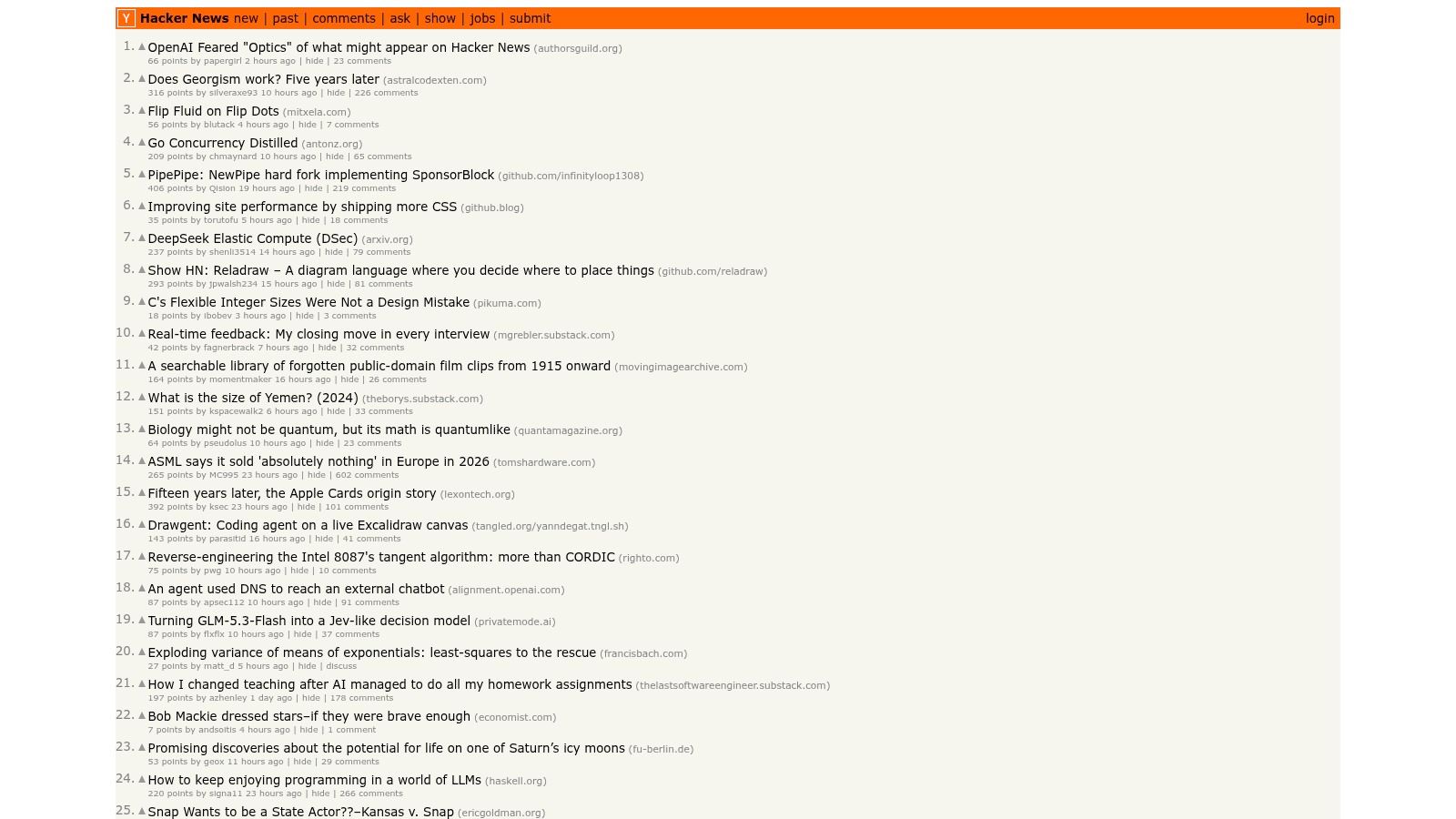
Show HN creates technical validation through inspection and use. It suits products that engineers, makers, or technical founders can try, question, or reproduce. A waitlist page offers little evidence. A working demo, command-line tool, open-source repository, or clear technical explanation gives readers something concrete to assess.
The audience on Hacker News expects restrained self-promotion. Explain the problem, show how the product works, and be ready for questions about architecture, pricing, security, performance, and scope. The discussion may expose weaknesses, but those objections often reveal more about product fit than passive traffic does.
Use this channel when you can support a public technical conversation. A compelling demo can attract curious visitors who never activate or pay, so prepare hosting, analytics, documentation, and a support route before publishing. Keep the product responsive under load. One website performance benchmark reports that 88.5% of people leave when a website doesn't load fast enough, while pages loading in 1 second can reach an average conversion rate of almost 40%. Those figures come from a separate 2026 statistics roundup, but the practical point remains: a slow demo weakens technical credibility at the moment scrutiny is highest.
A repeatable Show HN campaign
- Create a testable entry point: Let readers use the product, inspect the code, or reproduce the result without requesting a sales call first.
- Post a precise title: Name what you built and the problem it addresses. Avoid slogans, inflated outcomes, and vague launch language.
- Prepare for the thread: Answer questions with implementation details, state limitations plainly, and separate genuine discussion from requests for support.
- Convert feedback into work: Log recurring objections, review activation after the visit, and turn useful findings into fixes, documentation, or a follow-up post.
Show HN creates technical validation rather than launch-day spectacle. Choose it when the product can withstand inspection and your team can participate in the conversation.
3. Indie Hackers
Indie Hackers is built for compounding community exposure, not a single launch spike. Founders can share product decisions, milestones, experiments, and lessons across product pages, topical groups, and update posts on Indie Hackers. That format suits products whose positioning improves through repeated feedback.
The strongest posts give readers something useful to examine. Explain a pricing choice, failed acquisition test, customer objection, or technical trade-off, then invite informed responses. The discussion can sharpen your messaging while keeping the project visible to people familiar with early-stage constraints.
Expect slower, less predictable reach than Product Hunt or Show HN. Engagement depends on whether an update teaches something or opens a worthwhile conversation. Promotional announcements without evidence are easier to ignore, so publish progress that includes decisions, setbacks, and the next experiment.
A 2024 study of 387 product launches found a 23.1% conversion rate per engaged Indie Hackers post, compared with 3.1% per Product Hunt launch, according to this Indie Hackers launch strategy benchmark. The figures do not predict results for every product. They point to a useful trade-off: a relevant, engaged community may produce more efficient attention than broad launch exposure when members already understand the problem.
Build momentum in sequence
- Open the story early: Share the problem, prototype, or initial positioning before launch, and ask for specific reactions.
- Document decisions: Post what changed, what failed, and what you will test next. Include enough context for readers to offer useful feedback.
- Work the discussion: Reply consistently and separate product insight from requests for support.
- Connect the launch: Publish the launch thread when the product is ready, linking it to the earlier narrative and stating one clear next action.
- Reuse evidence: Convert recurring questions into documentation, onboarding copy, or a follow-up update.
Founders can extend those relationships through professional networking websites, while keeping Indie Hackers as the focused community channel. Choose it when you can publish continuously and participate in discussion, not when you need concentrated launch-day traffic.
4. BetaList
BetaList creates curated pre-launch reach, so its value depends on timing. Submit while the product is usable enough for visitors to try, but before your launch message needs maximum public attention. The platform reviews submissions, publishes accepted startups on a public timeline, supports UTM tracking, and provides a backlink through a redirect. Newsletter inclusion may depend on the selected plan. Review the current process on BetaList.
Use the listing as a clarity test, not a guarantee of demand. Editorial review forces the page to explain its audience, problem, product state, and reason to act quickly. If those points remain unclear to a reviewer, prospective users may also leave without joining the waitlist or trying the product.
BetaList requires a paid submission, with pricing shown in the submission form rather than a simple public rate card. Distribution is also limited. A listing usually creates one feature rather than a recurring acquisition stream, so founders should connect it to other pre-launch work and track its contribution separately.
A practical campaign sequence looks like this:
- Set the launch window: Submit when the product path works and you can respond to new interest promptly.
- Rewrite the first screen: State the audience, problem, product status, and early-access action without relying on a founder explanation.
- Create a tracked destination: Use campaign parameters and choose one conversion event before sending the submission.
- Prepare proof: Add concise visuals, a working product path, and enough context for visitors to evaluate the offer independently.
- Capture and qualify interest: Send visitors to a focused waitlist, early-access form, or trial. Avoid a generic homepage menu.
- Follow up quickly: Email new contacts, ask what prompted the visit, and compare activation with traffic from other channels.
BetaList fits founders seeking a credible pre-launch touchpoint and willing to prepare the page, product, and follow-up process beforehand. It cannot repair an unclear offer or an inactive product. Its strongest contribution is a scheduled external test that turns early exposure into measurable feedback.
5. AppSumo
AppSumo creates deal-driven acquisition by putting software in front of buyers who have a clear financial reason to act. Founders typically offer discounted access through a time-limited promotion in exchange for marketplace exposure, user feedback, and reviews. Commercial terms, co-marketing arrangements, and revenue share are negotiated through AppSumo, so evaluate the campaign on contribution margin and support load, not headline reach.
The channel concentrates demand quickly. That helps founders who need an early user cohort, testimonials, or direct evidence about which features create value. It also attracts price-sensitive customers whose usage and retention may differ from full-price subscribers.
Treat the promotion as a separate business experiment. Revenue share lowers margin, support requests may rise, and lifetime-deal buyers can complicate forecasts for recurring revenue. Tag every account and report deal users separately from standard customers.
A discount is an acquisition mechanism, not proof that your business model works.
Instead of repeating a standard launch checklist, build the campaign around five decisions:
- Set the offer boundary: Specify included features, usage limits, support terms, and update commitments before negotiations begin.
- Test operational capacity: Review onboarding, documentation, cancellation handling, and support staffing against a sudden increase in users.
- Instrument the cohort: Tag traffic and accounts so activation, usage, feedback, and support demand remain visible.
- Request useful reviews: Ask buyers about the problem solved, missing functionality, and time to value. Use the responses to prioritize product work.
- Explain the post-deal path: State what happens after the promotion, including any limits or upgrade options, before customers purchase.
AppSumo fits a founder willing to trade near-term economics for concentrated reach and a larger feedback loop. It is a poor default when support costs are already difficult to control or when the product depends on predictable recurring revenue from the start.
6. Reddit Ads and Targeted Subreddit Outreach
Reddit rarely rewards a polished launch announcement on its own. It works better as a targeted conversation channel, with paid testing used to identify which problem, audience, and message deserve more attention. Founders can join relevant communities organically and configure self-serve campaigns with interest or subreddit targeting through Reddit for Business. Available ad formats and bidding models can change, so confirm the current options before setting a budget.
Start with the problem people already discuss, then choose communities by audience fit. A developer tool may suit a subreddit focused on a particular workflow, while a consumer app may perform better where users describe the underlying frustration. Reading recent discussions before posting reveals accepted language, recurring objections, and moderation boundaries.
The public comment thread is part of the campaign. Reddit users quickly challenge vague claims, so answer with concrete details, limitations, examples, and evidence. A defensive reply can cost more trust than a weak ad costs clicks. Organic posts face the same rules, and ignoring them can lead to removal or reputational damage.
Build a repeatable sequence:
- Map the conversation: Record communities where people describe the product's target problem, including the language they use.
- Earn context: Read recent posts and identify which promotional formats moderators and members reject.
- Run a narrow test: Send paid traffic to a page that reflects the community's problem and offers one clear next step.
- Work the thread: Respond publicly with specifics, and share links only when they answer a question.
- Review the cohort: Use campaign performance tracking to separate clicks, sign-ups, activation, feedback quality, and continued use.
Reddit suits launches that need fast qualitative feedback alongside acquisition testing. Keep the first audience and message narrow enough to read every meaningful response.
7. StackSocial and StackCommerce
StackSocial and StackCommerce generate publisher distribution through marketplace listings, commerce articles, and partner networks. A merchant program can put discounted software in front of buyers who may never encounter an independent launch post. Review the current vendor route and terms through StackCommerce.
The channel creates a short acquisition push and can seed early users quickly. It fits software with a clear use case, low onboarding friction, and an offer that remains viable under promotional pricing. Deal exposure may also produce user feedback or testimonials, but those benefits depend on attracting customers who continue using the product after purchase.
The trade-off is control. Revenue share, promotional rights, positioning, and customer ownership depend on the agreement. Deal audiences also expect substantial discounts, which can anchor perceived value and make future price increases harder to explain. Model those effects before committing inventory or support capacity.
Use this sequence:
- Test the economics: Include revenue share, refunds, support, fulfillment, and the cost of serving promotional users.
- Shape the offer: Choose a limited feature set, usage allowance, or defined access period that protects the standard plan.
- Prepare the handoff: Supply accurate copy, screenshots, use cases, onboarding instructions, and support guidance for the publisher.
- Separate the cohort: Create campaign links and account tags so traffic, activation, reviews, and continued usage remain visible.
- Set expectations: Explain how promotional access differs from the standard product, including limits and renewal terms.
Publisher distribution is a fit when rapid user seeding matters more than maximum margin or full control over presentation. Treat the agreement as a channel decision with operational consequences, not as a simple listing.:VEVENT
Top 7 Website Launch Campaigns Comparison
| Platform | Implementation Complexity (🔄) | Resource Requirements (⚡) | Expected Outcomes (⭐📊) | Ideal Use Cases (💡) | Key Advantages (⭐) |
|---|---|---|---|---|---|
| Product Hunt | Low 🔄, structured launch tooling, scheduling | Low–Medium ⚡, asset prep (video/pricing), outreach | High-day spike in targeted visitors, early adopters & feedback ⭐📊 | Consumer/tech products seeking launch visibility and social proof 💡 | Large early-adopter audience; built-in checklists and launch pages ⭐ |
| Hacker News (Show HN) | Low–Medium 🔄, needs a demo and clear title | Low ⚡, no fee but requires interactive product and moderation-ready team | Intense attention and high-signal technical feedback; potential adoption spikes ⭐📊 | Developer tools, demos, interactive products that invite technical scrutiny 💡 | Technical, thoughtful audience that provides detailed feedback ⭐ |
| Indie Hackers | Low 🔄, ongoing posts and updates | Low ⚡, time for community engagement and updates | Gradual, compounding exposure and peer validation over weeks ⭐📊 | Building in public, iterative launches, founder-to-founder feedback 💡 | Supports ongoing distribution and practical peer-based advice ⭐ |
| BetaList | Low 🔄, submission + editorial review process | Medium ⚡, paid listing; UTM/backlink benefits; predictable timeline | Predictable pre-launch exposure, editorial curation and tracking ⭐📊 | Pre-launch startups wanting curated exposure, backlinks, and predictable timing 💡 | Editorial curation, UTM tracking and do-follow backlink once accepted ⭐ |
| AppSumo | Medium–High 🔄, negotiations, partner terms, merchandising | High ⚡, revenue-share terms, potential support load during deals | Rapid cash and many price-sensitive users; lots of reviews (may affect ARPU) ⭐📊 | SaaS/products seeking fast revenue, reviews, and buyer-volume promotions 💡 | Access to large buyer audience and co-marketing; strong merchandising ⭐ |
| Reddit Ads + targeted subreddit outreach | Medium 🔄, ad setup + community outreach and moderation risks | Medium ⚡, flexible budget; requires community management and creative testing | Targeted conversions when matched to right subreddits; variable engagement ⭐📊 | Niche B2B/B2C testing where community intent aligns (e.g., r/SaaS) 💡 | Precise community targeting and lower-cost niche tests vs. broad platforms ⭐ |
| StackSocial / StackCommerce | Medium 🔄, merchant agreements and marketplace setup | Medium ⚡, revenue-share, promotional discount expectations | Awareness, cashflow and review/testimonial generation via publisher channels ⭐📊 | One-time promotional pushes to seed users and collect testimonials 💡 | Broad publisher reach and commerce-content placements to boost visibility ⭐ |
Build the Campaign Around the Momentum You Need
Choose the channel by the kind of momentum it creates. Product Hunt concentrates discovery around launch day. Show HN is better for technical validation when people can use or inspect the product. Indie Hackers supports repeated founder visibility and learning over time. BetaList offers curated pre-launch exposure. AppSumo and StackSocial or StackCommerce can accelerate acquisition through deals, but they bring margin, pricing, and support trade-offs. Reddit combines audience targeting with direct conversation.
Don't begin by asking which platform is most popular. Begin with one conversion goal. That might be a qualified trial, an activated account, a contribution, a technical review, or a documented objection. Then prepare the evidence and tracking needed to judge that outcome. A useful analytics dashboard for growth should help you distinguish source traffic from meaningful behavior.
The technical layer deserves the same attention as the promotional layer. A 2026 website statistics roundup reports that 61.19% of website traffic comes from mobile devices, so test the launch page on phones before sending paid or community traffic. The same source's speed findings make a slow checkout, sign-up form, or demo a campaign problem, not merely a design issue. Teams should define Core Web Vitals targets before launch, including Largest Contentful Paint at 2.5 seconds or less and Interaction to Next Paint at 200 milliseconds or less, using the benchmark guidance cited in this marketing conversion-rate resource.
A repeatable sequence looks like this:
- Define one outcome: Pick the action that matters and the audience most likely to take it.
- Prepare proof: Add a working demo, customer language, product screenshots, testimonials, or live traction where available.
- Set up tracking: Use distinct links, events, source tags, and a way to review activation or contribution quality.
- Launch where the audience fits: Choose the channel whose mechanics support your goal, not the one with the loudest reputation.
- Follow up quickly: Respond to questions, help new users, fix friction, and publish what you learned while attention is fresh.
- Review before repeating: Compare visits, sign-ups, activation, contributions, retention signals, and feedback quality. Keep the parts that produced evidence, not just impressions.
Fundl can support an evidence-first version of this process by connecting Stripe, GitHub, and analytics data to a shareable traction page. Live metrics such as Monthly Recurring Revenue, weekly commits, and Monthly Active Users can sit beside the campaign message, helping founders show demand and shipping activity without relying on stale screenshots. For a launch where credibility matters as much as reach, that evidence can become part of the conversion path.
Fundl turns connected live metrics into a shareable traction page for SaaS, AI, open-source, and creator projects, so launch visitors can see evidence alongside the offer. Set up your goals, connect your data, and visit Fundl to give your next campaign a clearer proof layer.