
You've built the product, connected billing, polished the campaign page, and picked a launch date. Two weeks before launch, you realize the page has no committed audience, your only proof is a demo, and every promotional post sounds like an advertisement. That's the point where most indie founders start “doing marketing.” It's also where they've already surrendered their strongest advantage.
A practical crowdfunding marketing strategy for SaaS treats traction as the campaign's central message. MRR, active users, weekly commits, integrations, refunds, and changelog entries give skeptical technical backers something more valuable than polish, evidence. Your job is to collect that evidence before launch, sequence attention during launch week, and keep publishing the truth after the initial spike fades.
Table of Contents
- The Pre-Launch Window Most Indie Founders Treat Too Late
- Building a Pre-Launch List That Actually Converts for SaaS
- Launch Week Sequencing for Solo Teams
- Picking the Three Channels You Can Run Without a Team
- Turning Live Metrics Into Update Copy
- Diagnosing the Failures Nobody Talks About
- Measure These Four Numbers or Don't Launch
The Pre-Launch Window Most Indie Founders Treat Too Late
Launch day isn't the starting line. It's the first public test of work that should already be underway.
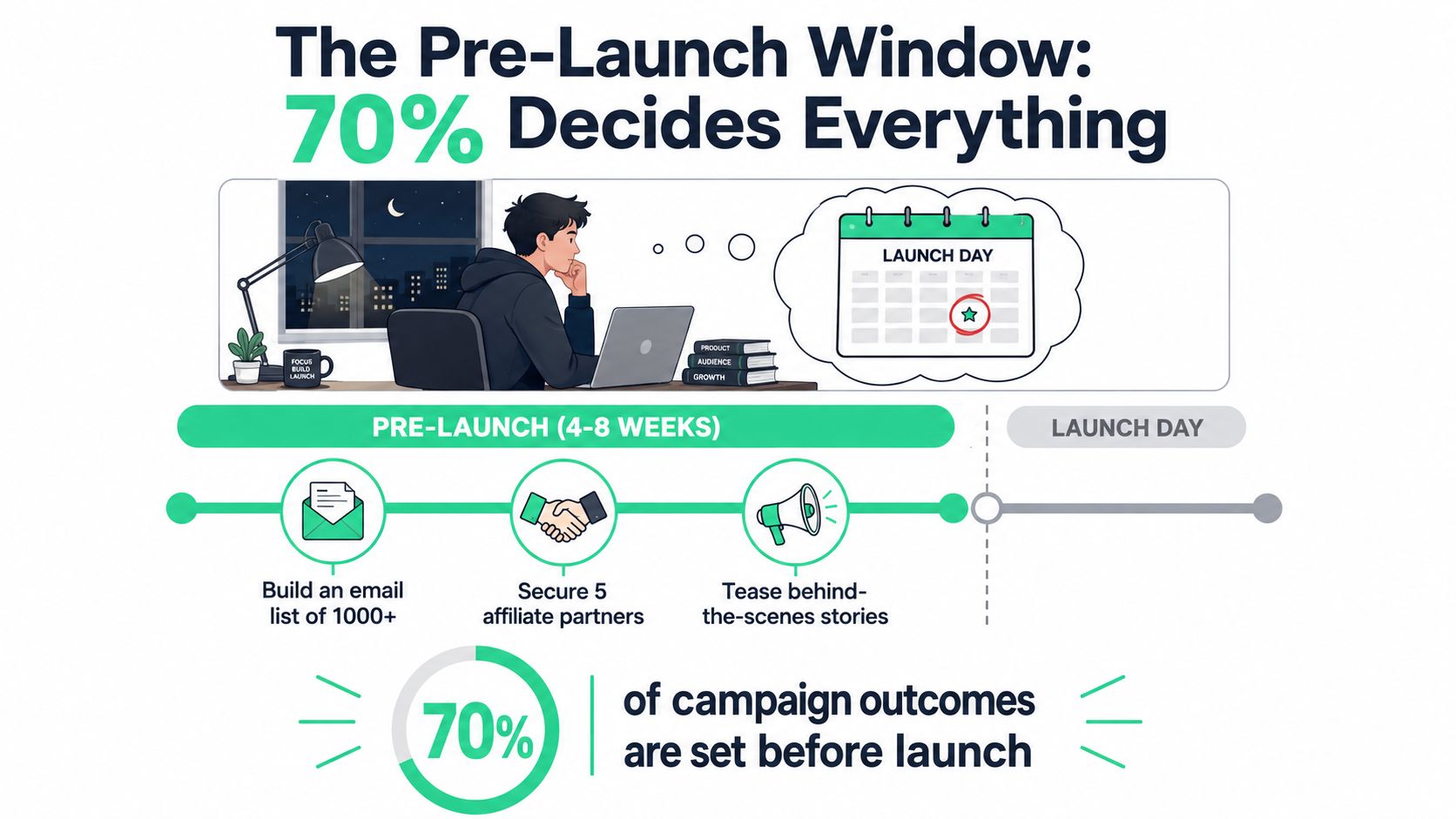
A solo founder who publishes a clean campaign page two weeks before going live may have a convincing product, but the page still opens into an empty room. Without people ready to click, question, share, and pledge, the campaign can stall before the platform has any reason to surface it. A second founder might spend the same period collecting feedback from beta users, documenting product changes, and building a warm audience. That founder launches with proof instead of hope.
The exact timing depends on the product and audience, but the principle is firm. The pre-launch period creates the conditions that launch-day promotion can activate. Guidance on how to boost brand awareness is useful here because awareness work is repeated exposure, not a single announcement.
Manufacture proof before you request money
For software, “pre-launch asset” shouldn't mean another landing-page illustration. It should mean evidence that the product works and that people return to it.
Collect:
- Beta feedback: Ask users where setup failed, what they used repeatedly, and what they'd pay to keep.
- Integration demonstrations: Show the product working with the tools your audience already depends on.
- Retention snapshots: Share whether users come back, without disguising weak results.
- Shipping history: Publish meaningful changelog entries and explain why each change matters.
- Founder context: Tell people what problem you encountered and what you've changed after user feedback.
A polished page can explain your promise. It can't substitute for a history of execution. The strongest crowdfunding marketing strategy for an indie SaaS product makes the campaign page the latest chapter in an existing public record.
Start the countdown earlier than feels comfortable
Build the waitlist while the product still has rough edges. Invite a small group to test it. Ask for reactions, objections, and introductions. Publish progress before you need attention.
Campaign data cited by Startups.com's crowdfunding statistics summary reinforces why this matters: campaigns that update supporters every five days raise about 3× more than campaigns that don't, and regular follower updates are associated with 126% more funds raised. The same source reports that 42% of funds in an average campaign arrive during the first and last three days, making launch and closing phases unusually important.
Your launch date should be the halfway mark in the relationship, not the moment you begin introducing yourself.
Building a Pre-Launch List That Actually Converts for SaaS
A list is only useful when subscribers understand the product, trust the founder, and know what action to take on launch day. Start with one primary acquisition surface. For most indie SaaS products, that's a focused landing page connected to an email provider, not five social profiles competing for your attention.
Build the asset around the product
Your lead magnet should be a working artifact. Offer a small utility, a limited beta, a template that runs inside the product, or access to a narrowly defined workflow. A PDF about productivity won't qualify a developer who needs your API monitoring tool.
Write the landing-page headline around the pain:
“Find the failed background job before your customer does.”
Then explain the product in one sentence, show a real interface, and state what subscribers will receive. Use double opt-in, tag subscribers by acquisition source, and record which message or community generated each signup. Good list hygiene protects deliverability and keeps your launch data useful. For practical guidance on how to maintain email lists, focus on consent, engagement, and removing inactive contacts instead of treating list size as the only goal.
Sequence the soft circle
Start with 10 to 20 friendly founders, then move into niche communities where your audience already discusses the problem. Ask for reactions, not passive signups:
- “Which part of this workflow would make you pay for the tool?”
- “What would stop you from trusting this with production data?”
- “Can you test the current version and tell me where onboarding breaks?”
Use community participation carefully. A thoughtful post in an Indie Hackers discussion or a relevant subreddit can produce stronger evidence than a generic launch announcement. These community engagement strategies can help you structure participation without turning every interaction into a pitch.
Set a list target that relates to the amount you need to raise, but don't chase an arbitrary audience. Recent coverage of crowdfunding in 2026 emphasizes pre-built audiences, early momentum, micro-communities, and evidence-first validation, particularly for products serving technical buyers. Minor Visuals' 2026 crowdfunding analysis cites a 78% success chance for campaigns that reach the first 20% of funding within 48 hours, while also warning that smaller warm audiences can underperform sharply.
| List Source | Realistic Conversion Range | Typical List Size |
|---|---|---|
| Friendly founders and beta users | High-intent, but limited volume | Small |
| Niche communities | Variable, trust-dependent | Small to medium |
| Product-led signup flow | Moderate, with stronger product context | Growing |
| Paid or partner acquisition | Requires testing and attribution | Variable |
Don't present the table's qualitative ranges as guarantees. Use your own tagged signup data to replace assumptions before launch. The objective is a warm list that understands the product and is willing to act, not a large spreadsheet of strangers.
Launch Week Sequencing for Solo Teams
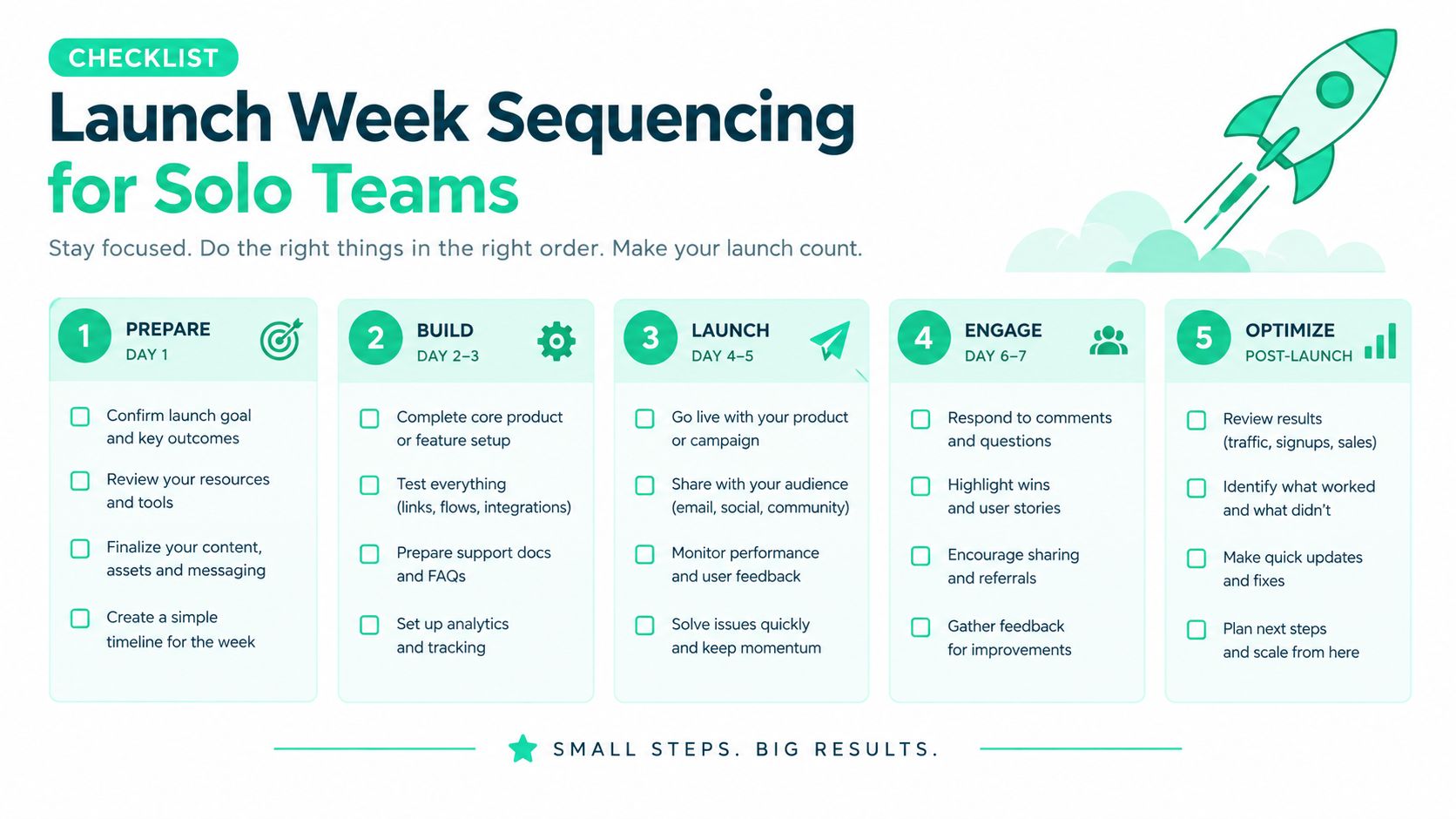
Launch week needs an order. If you publish everywhere at once, you lose the ability to learn which message caused movement. Give your warmest audience the first request, then widen the circle as the campaign accumulates proof.
Day one through day five
Day 1, inner-circle launch: Send the campaign link to beta users, close supporters, and people who gave meaningful feedback. Offer a clearly defined early-bird tier for the first 24 hours if your platform and terms allow it. Ask recipients to pledge, reply with an objection, or forward the message to one qualified person. Email goes first, then direct conversations.
Day 2, public launch: Publish the announcement on your primary social channel, send the public email, and create one community thread adapted to that community's norms. Lead with the customer problem, show the product in use, and include the campaign link only after explaining why the project exists.
Day 3, proof update: Publish a real progress metric. Choose signups, commits, MRR, active users, or another signal you can verify. Explain what changed since yesterday and what the next funding milestone will achieve.
Day 4, founder story: Share the origin of the problem, the failed approach, and the decision that shaped the current product. Ask a relevant partner to share a complementary version of the story rather than copying your announcement.
Day 5, roadmap reveal: Tie a stretch goal to a concrete product or infrastructure item. “More features” is weak. “Ship the GitHub integration and publish the implementation notes” gives backers a reason to care.
Lead with the channel that has the highest trust for that audience. Email usually comes before public posting for a warm list. A community post should come after you've checked its rules and written for its members, not for an abstract algorithm.
Ninety-minute rule: Write one strong email, one concise public update, and one direct outreach batch. Cut decorative graphics, extra platforms, and meetings before you cut founder communication.
Campaigns with video have shown materially stronger outcomes in large datasets. One dataset reports 60% higher success odds with clear storytelling and visuals, while another reports 105% more raised for campaigns with personal video than campaigns without it, as summarized by ElectroIQ's crowdfunding statistics coverage. Use a short founder-led video early, then let the written updates carry the rest of the week.
Picking the Three Channels You Can Run Without a Team
You don't need every channel. You need a small system that produces attention, trust, and repeatable sharing without consuming the hours required to build the product.
Email usually wins on conversion because subscribers have already raised their hands. It loses on discovery because the list can't grow unless another channel feeds it. Community channels create credibility through conversation, but moderation and thoughtful participation can consume your entire day. Product-led loops scale better because the product can invite users to share without you initiating every interaction.
| Channel | Weekly Time Cost | Conversion Strength | Best For |
|---|---|---|---|
| Low to moderate | Strong with warm subscribers | Launch announcements and updates | |
| Community | Moderate to high | Strong when trust exists | Objections, feedback, and discovery |
| Product-led | Front-loaded, then lower | Depends on product usage | Referrals and organic sharing |
Pick two primary channels plus one amplifier. For a solo SaaS founder, a sensible combination is email for conversion, one technical community for trust, and a product-led referral or share mechanism as the amplifier.
A workable allocation might look like this: maintain one useful newsletter, publish a focused Indie Hackers discussion when you have a real lesson, and add an in-product invite link that gives users a reason to bring in a collaborator. The newsletter keeps existing interest warm. The community post earns discussion. The referral mechanic creates distribution while users are already receiving value.
Cut channels by evidence, not habit
Give each channel a job:
- Email must drive action: Clicks, replies, pledges, or useful objections should justify the send.
- Community must produce trust: Look for questions answered, qualified conversations, beta applicants, or referrals.
- Product-led sharing must reduce founder effort: If every referral requires a personal message from you, it isn't a scalable loop yet.
Use UTM tags and platform analytics to see which channel sends qualified visitors. For creative variants that need fast testing, a tool such as the ShortGenius AI ad generator can help you produce alternative video or ad concepts without turning content production into a second full-time job.
If week one underperforms, drop the broadest, least measurable channel first. Don't abandon email or a community where people are asking serious questions just because the first post didn't spread. Remove the activity that consumes time without creating either qualified traffic or product evidence.
Turning Live Metrics Into Update Copy
Technical backers don't need inflated language. They need a clear view of what changed, what the numbers mean, and what you'll do next.
Pull metrics on Monday, write the narrative on Wednesday, and publish an honest reflection on Friday. That rhythm gives you enough time to notice movement without manufacturing news every day. Your update cadence becomes part of the marketing because each post gives readers another reason to return.
Translate dashboards into evidence
Use a simple structure:
- State the current number.
- Explain the change or context.
- Name what you learned.
- Connect funding to the next practical step.
For example:
“We have 47 paying users, $1,180 MRR, and 3 refunds. The refunds came from teams that expected a shorter setup process. This week I'm simplifying onboarding and documenting the integration path. Funding will let me finish the automation work without pausing support.”
That copy doesn't hide the refunds or pretend that revenue alone proves product-market fit. It gives readers a reason to believe you understand the weaknesses.
Safe metrics to share publicly include:
- MRR, when the figure is accurate and clearly defined.
- Paying-user count.
- Weekly or monthly active users.
- Weekly commits or shipped releases.
- Refund count with relevant context.
Keep private anything that exposes individual customer information, confidential contract terms, or security-sensitive operational details. Don't publish raw credentials, private support conversations, or data that lets a reader identify a customer without permission.
A useful campaign page should make this evidence easy to scan. Review examples and page structures in Fundl's guide to the best crowdfunding pages, then build your own version around verified product activity rather than decorative claims.
Publish the dip when the dip matters
If active users fall or refunds increase, write the update before someone else notices. Explain whether the decline came from churn, seasonality, an onboarding problem, or a measurement change. Never claim that an honest post “recovered conversions” unless your own analytics can prove the relationship. The reliable rule is simpler: silence creates uncertainty, while a specific explanation gives backers something concrete to evaluate.
Diagnosing the Failures Nobody Talks About
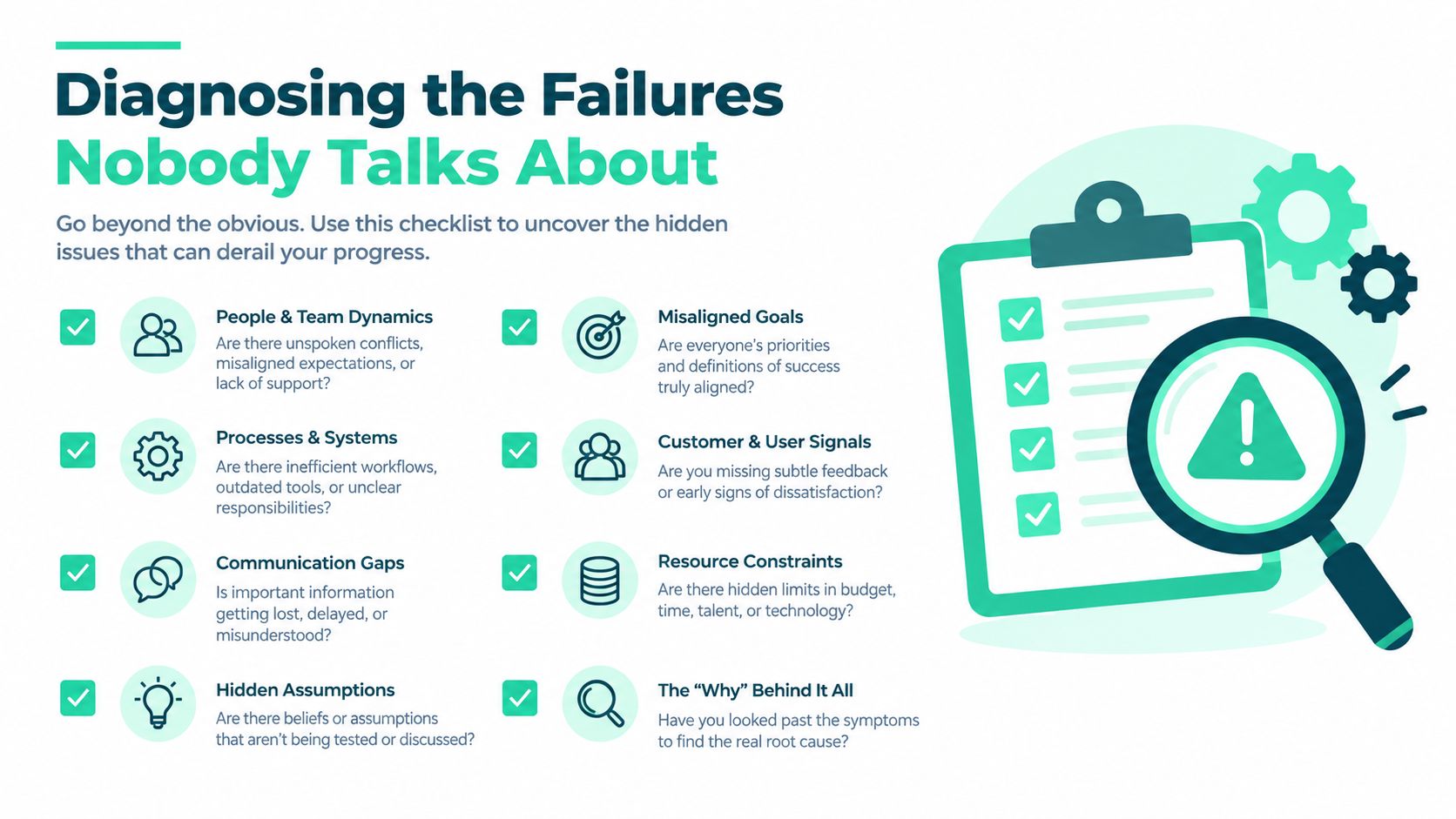
Campaigns often fail after a strong opening. The page remains live, notifications slow down, and the founder keeps posting the same appeal. Three failure modes deserve attention before they become permanent.
The under-funded plateau
The campaign receives an initial burst, then stops moving. Ask: Did the first audience understand the next reason to pledge, or did I only repeat the launch announcement?
Fix the missing reason before the second week ends. Publish a product milestone, answer the strongest objection, introduce a specific roadmap item, or show a working integration. Backers need a new piece of evidence, not a louder version of the same request.
Momentum thresholds matter. Campaigns that reach 30% of their funding goal within the first week have a reported 75% success probability, according to the ElectroIQ summary linked earlier. That makes early traction a strategic target, not a vanity milestone.
The refund spike
Refunds can damage confidence because they suggest the promise and the delivered experience don't match. Ask: Which expectation did the campaign create that onboarding or product behavior failed to meet?
Read refund reasons individually, then fix the first broken step. Update the campaign copy so new backers see the setup requirements. Publish one clear explanation instead of burying the issue in a long update.
Update decay
Silence creates a loop. Fewer updates lead to fewer visits, fewer visits produce less feedback, and the lack of feedback makes the next update harder to write. Ask: What changed in the product, customer behavior, or plan since the last post?
A stripped-down changelog often beats a polished landing page in week two because it shows movement. One reported dataset found that campaigns with regular updates raise 126% more than campaigns with no updates, as summarized in the earlier ElectroIQ source.
Every failure mode gets exactly one public acknowledgment. Name the symptom, state the cause you currently understand, and list the fix you're shipping. Hiding a visible problem costs more trust than explaining it.
Measure These Four Numbers or Don't Launch
A dashboard should answer four decisions: when to push email, when to publish a roadmap update, when to adjust an offer, and when to cut a channel that consumes time without producing useful activity.
Track pledge rate per hour, email click-to-pledge ratio, traffic-source attribution, and refund or chargeback signals. Use your crowdfunding platform dashboard for pledge timing, tagged links for source tracking, and a privacy-conscious analytics tool such as Plausible or Fathom for page behavior. If payments run through Stripe, review payment-risk and dispute signals through the tools available in your account.
The campaign platform's dashboard tells you when movement happens. Your email provider tells you which segment clicked. UTM-tagged links connect the click to a source. Your product analytics and payment records explain whether the pledge came from a qualified user or from an audience that misunderstood the offer.
The four decisions
Pledge rate per hour shows whether attention is producing action. Watch the pattern across your launch window, not a single hour. If traffic rises while pledges stay flat, improve the offer explanation or campaign page before buying more reach.
Email click-to-pledge ratio tells you whether your warm audience understands the request. A low ratio can mean weak segmentation, unclear copy, or a mismatch between the promise in the email and the campaign page. Send the next message to the segment most aligned with the product instead of broadcasting to everyone.
Traffic-source attribution protects your time. Tag newsletter, community, partner, and product links separately. Keep the sources that deliver qualified visits and meaningful actions. Reduce the ones that create impressions without intent.
Refund and chargeback signals reveal expectation failure or payment friction. Review them quickly, separate product dissatisfaction from processing issues, and correct the relevant copy or flow. For a broader view of funding options and preparation, consult Fundl's startup funding guide.
| Metric | Tool | Healthy Floor | Decision It Triggers |
|---|---|---|---|
| Pledge rate per hour | Kickstarter or Indiegogo dashboard | Set from your own launch baseline | Push, pause, or revise the offer |
| Email click-to-pledge ratio | Email provider plus tagged campaign links | 12% as a working email-to-pledge floor | Rewrite or segment the next send |
| Landing-page conversion | Plausible or Fathom with tagged traffic | 2% as a working floor | Improve page clarity before adding reach |
| Refund or chargeback signal | Stripe payment and risk tools | No unexplained increase | Investigate expectations or payment friction |
The 2% landing-page conversion and 12% email-to-pledge rate are operating floors for the example measurement system, not universal laws. Treat them as decision prompts, then replace them with benchmarks from your own audience and product.
Fundl can support an evidence-first workflow by connecting Stripe, GitHub, and analytics data to a shareable traction page with live metrics such as MRR, weekly commits, and MAU. It uses reward-based contributions processed through the creator's Stripe account, so your campaign narrative can center on current product activity rather than stale screenshots.
If you're preparing a SaaS crowdfunding campaign, start by gathering your live traction signals, tagging every acquisition source, and scheduling the first week of updates before you publish the campaign. Fundl gives you a practical way to turn verified metrics into a shareable funding page, so visit Fundl, connect your data, set your goal, and give backers evidence they can evaluate.