
The biggest crowdfunding site isn't automatically the best crowdfunding for apps. An app founder selling early access needs a different mechanism from an open-source maintainer seeking recurring sponsorship, and both need a different setup from a company offering investors ownership.
Start with the job the money must do. Reward crowdfunding validates demand and collects pre-orders. Recurring sponsorship funds maintenance. Memberships turn ongoing access and content into predictable support. Equity crowdfunding raises investment, but it also creates securities, compliance, reporting, and shareholder obligations.
The right choice depends on audience fit, validation mechanics, payment flow, fees, traction evidence, campaign control, and fulfillment risk. A platform can bring reach but still leave you responsible for driving most backers. Another can offer flexible funding but create a delivery obligation before the product is ready. Equity platforms can access community capital, yet they require far more preparation than a reward campaign.
Fundl stands apart when live, source-verified metrics should lead the pitch. Kickstarter and Indiegogo are stronger for deadline-driven launches and pre-sales. Open Collective and GitHub Sponsors fit open-source maintenance, Patreon fits recurring membership, and Wefunder, StartEngine, and Republic fit investment fundraising.
Table of Contents
- 1. Fundl
- 2. Kickstarter
- 3. Indiegogo
- 4. Crowdfundr
- 5. Open Collective
- 6. GitHub Sponsors
- 7. Patreon
- 8. Wefunder
- 9. StartEngine
- 10. Republic
- Top 10 Crowdfunding Platforms for Apps, Comparison
- Choose the Funding Model Before the Platform
1. Fundl
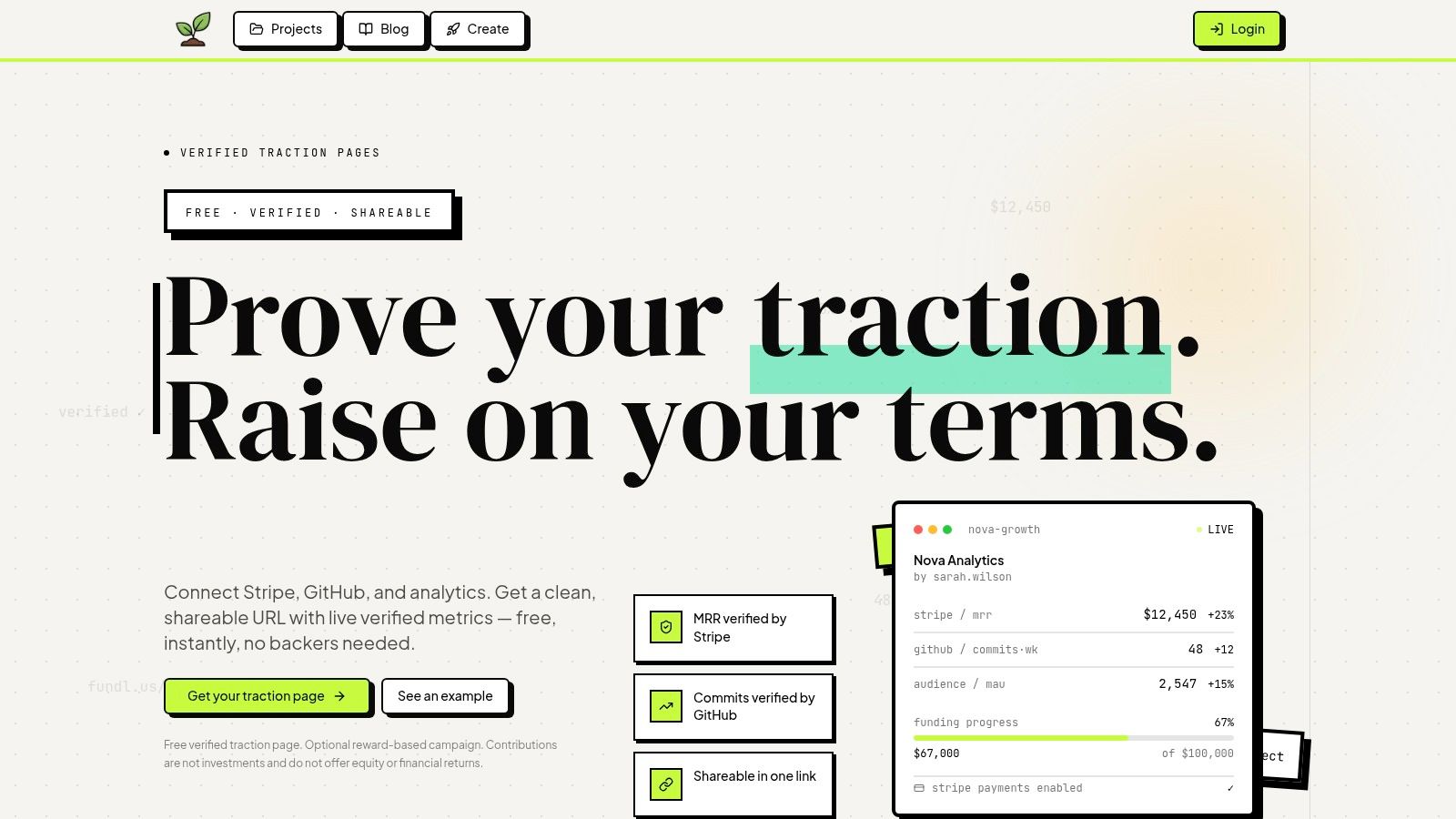
Fundl is the strongest choice when an app creator needs to prove that demand already exists. Instead of relying on a slide deck, screenshots, or optimistic projections, creators connect Stripe, GitHub, and analytics accounts to publish a shareable traction page with live, source-verified signals.
The page can show Monthly Recurring Revenue, commit activity, Monthly Active Users, and other connected metrics. Those figures auto-refresh, so backers can assess current performance rather than reviewing a stale launch snapshot. Sample Fundl pages display metrics such as MRR, weekly commits, and MAU directly from their original sources. The setup is designed to take about 15 minutes, and the page can support a funding goal, campaign timeline, project details, and optional rewards.
Why traction changes the pitch
Fundl is built for indie hackers, solo founders, SaaS teams, AI creators, developer-tool makers, and open-source projects. These products often have useful evidence before they have the polished story expected by a traditional campaign. Revenue, usage, and shipping activity can communicate more than a long vision statement.
The standardized proof layer also helps backers compare projects by revenue, build activity, and audience signals. That matters in crowded app categories, where an idea alone is easy to imitate and difficult to evaluate.
Practical rule: If your strongest asset is live product evidence, put that evidence above the pitch deck.
Payment control and limitations
Contributions are processed through the creator's own Stripe account, rather than platform-held escrow. That gives creators direct control over payment flow and payouts, but it also means they should review Stripe processing costs, refund handling, taxes, and customer support responsibilities before launching.
Fundl is reward-based, not equity-based. Backers don't receive ownership or financial returns, so it's the wrong platform for a founder seeking a formal investment round. It's the right platform when the goal is to turn verified traction into support, pre-sales, early access, or product-specific rewards.
Choose Fundl when credibility and transparent evidence matter more than built-in mass discovery.
2. Kickstarter
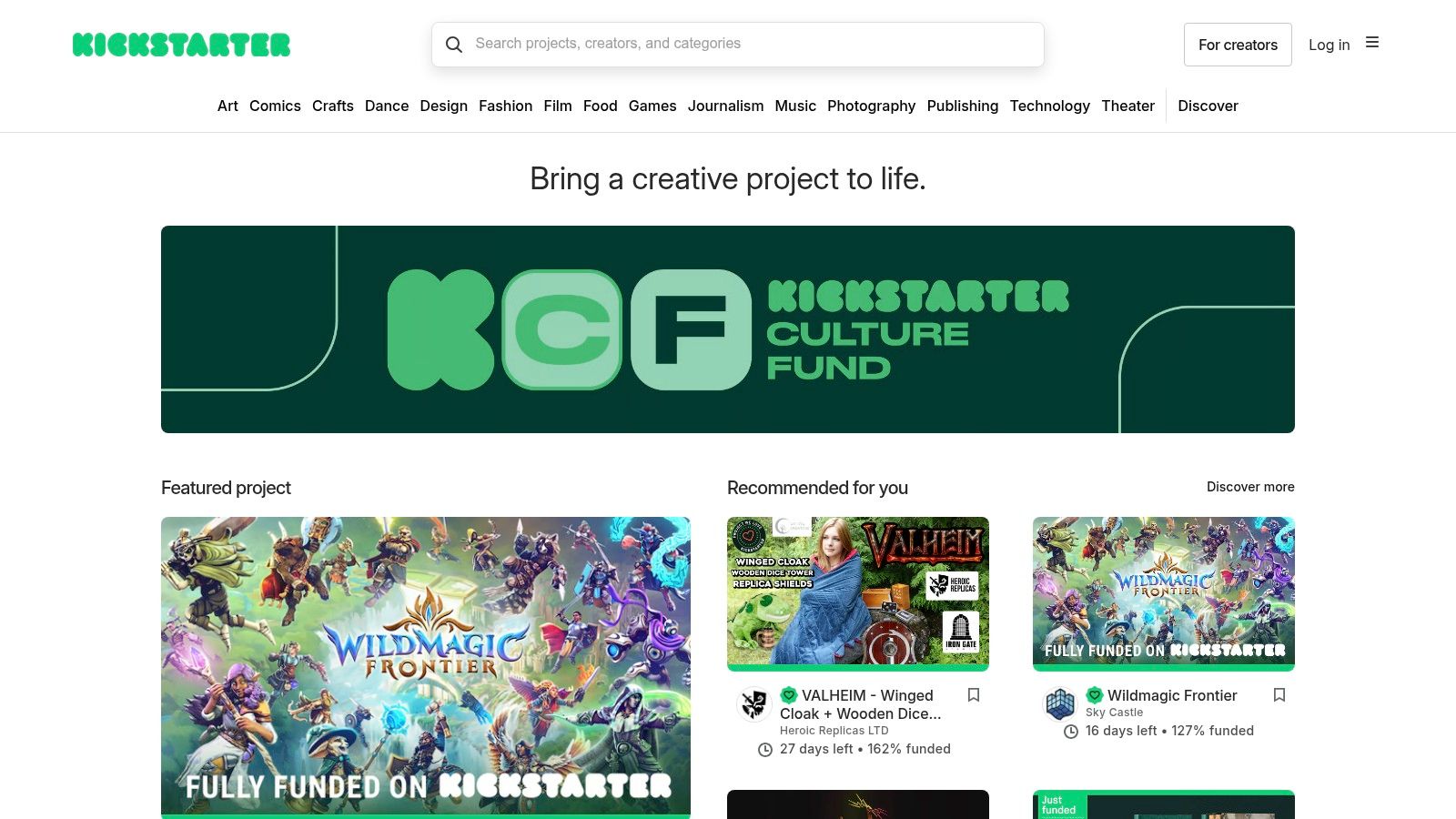
Kickstarter remains the clearest choice for an app creator who needs a public launch with a deadline, visible funding goal, and reward tiers. Its all-or-nothing model gives campaigns a simple promise: the project receives funding only if it reaches its target. That structure creates urgency and protects creators from accepting money for a plan that falls materially short of its funding requirement.
The platform is especially effective for app-enabled hardware, polished consumer apps, and software with a visual demonstration. A strong product video, clear interface, and specific reward ladder can make the campaign easy to understand. Kickstarter also offers discovery through categories and editorial curation, while updates, backer messaging, and surveys help creators manage fulfillment after the campaign.
Where Kickstarter works best
Use Kickstarter for pre-sales and launch validation, not for collecting indefinite support. Backers expect a defined project, a credible delivery plan, and rewards that feel tangible. Lifetime software licenses, early access, premium feature bundles, and app-plus-device packages can work well when the creator can explain exactly what each tier includes.
The platform's recognition can also help with press outreach and influencer attention. But visibility isn't a substitute for a warm audience. App campaigns still need a compelling demo and direct traffic from communities that already care about the problem.
For a useful framework on reward mechanics, see this guide to reward-based crowdfunding platforms.
Fees and fulfillment
Successfully funded campaigns lose platform and payment-processing fees. A common campaign structure includes about 5% in platform fees and 3% to 5% in payment processing, as described in this app funding guide. Treat those deductions as part of the funding target, not as an afterthought.
Kickstarter's main risk is fulfillment. A campaign can validate demand while creating a large delivery obligation. Set rewards around features you can ship, publish realistic timelines, and avoid promising a broad product roadmap in exchange for early cash.
3. Indiegogo
Indiegogo is the better pick when an app creator wants more control over how funds are collected and how long sales continue. Unlike a strictly fixed campaign structure, Indiegogo supports fixed and flexible funding. Flexible funding lets a creator keep the money raised even when the campaign doesn't reach its original target, provided the campaign terms and fulfillment plan support that decision.
That option suits software projects with a usable minimum release, modular feature plans, or a product that can ship in stages. It can also work for lifetime licenses, early-access memberships, and combinations of software with physical products.
The post-campaign advantage
Indiegogo's InDemand option allows creators to continue accepting orders and pre-orders after the initial campaign deadline. That makes the platform useful for an app that needs a launch event but also expects demand to continue after the main push.
The trade-off is operational. Continued orders can extend the fulfillment window, increase support requests, and create pressure to keep selling while the original backers are still waiting. Separate the promises made to launch backers from later offers, and publish the delivery sequence clearly.
Audience and campaign discipline
Indiegogo has international reach and a checkout experience designed for conversion, but organic discovery can be weaker than on Kickstarter in some categories. Founders should plan to bring traffic from an email list, product community, social channels, partnerships, or existing users.
Flexible funding also requires discipline. Don't set a low bar just because you can keep partial proceeds. Calculate the minimum amount needed to deliver the promised app, support users, process refunds, and cover payment costs before choosing the campaign model.
Choose Indiegogo when continued pre-orders and funding flexibility matter more than the strict urgency of an all-or-nothing launch.
4. Crowdfundr
Crowdfundr is a practical option for an indie app creator who wants a creator-focused rewards campaign without committing to the largest platform's structure. It supports perk tiers, add-ons, campaign extensions, and both all-or-nothing and keep-it-all funding approaches.
Its most notable pricing feature is a fee-recovery model that can let the creator choose a “$0 to creator” arrangement. Under that structure, supporters help cover platform costs, while payment processor charges still apply. The amount a creator keeps depends on the selected pricing model and transaction flow, so review the checkout terms before publishing a target.
Why it suits self-driven launches
Crowdfundr works best when the creator already has an audience. Its built-in discovery is smaller than the largest reward platforms, which means the founder must handle more of the campaign marketing. That's not a weakness for a maker with a newsletter, community, beta list, or active social presence. It can be a disadvantage for a first-time creator expecting the platform itself to supply demand.
Use the campaign to offer early access, feature-based perks, private onboarding, or lifetime licenses. Keep the reward menu short enough that each tier remains easy to deliver.
Choose fee recovery only after modeling the complete checkout flow, including processor charges and the supporter's final payment.
Crowdfundr is the right answer when flexible funding and lower direct platform cost matter more than broad organic discovery. It's a campaign tool, not a replacement for audience development.
5. Open Collective
Open Collective is built for ongoing, transparent funding, making it a strong choice for open-source apps, community software, and projects with shared operating costs. It differs from a launch platform because the central promise isn't a dramatic deadline. It's visibility into how money arrives and where the project spends it.
Projects can publish public income and expense records, accept recurring or one-time contributions, and use sponsorship tiers. Fiscal hosting can also help with administrative and compliance tasks, including receiving funds and handling payouts. That structure is useful for maintainers who need to pay contributors, reimburse expenses, fund infrastructure, or support regular releases.
Maintenance over launch hype
Choose Open Collective when the app already has a community that understands why maintenance matters. A transparent ledger can make a recurring contribution easier to justify because supporters can see the project's financial needs and spending decisions.
It's less effective for a mainstream consumer launch that depends on pre-orders, polished rewards, and impulse-driven campaign momentum. The audience is more likely to support infrastructure, development, moderation, documentation, or community operations than a promise of a future consumer app.
Review hosting economics
Host fees vary, and the relationship between the fiscal host and the platform can make the net amount difficult to estimate. The Open Collective platform should be reviewed alongside the selected host's terms before you set a recurring target.
For open-source teams, the operational benefit often outweighs the lack of launch-day spectacle. You can show the budget, separate project expenses from personal income, and create a durable funding home instead of restarting a campaign every time a release needs support.
6. GitHub Sponsors
GitHub Sponsors is the most direct fit for an open-source app, library, plugin, or developer tool whose users already live on GitHub. Sponsorship appears alongside developer profiles and repositories, placing the funding request where contributors and dependents already see the work.
Maintainers can offer one-time and recurring sponsorships through supporter tiers. Organizations can also use sponsor tools and invoicing features, which helps teams that rely on the project internally. The platform aligns the payment request with the codebase itself, so a user can move from reviewing a repository to supporting its maintenance without leaving the developer ecosystem.
The audience is the advantage
GitHub Sponsors doesn't solve discovery for a project with no GitHub footprint. The maintainer still needs documentation, release notes, visible contribution guidelines, and direct outreach to users who depend on the code. Sponsorship converts existing trust more effectively than it creates new attention.
That makes it ideal for recurring maintenance, not a conventional app pre-sale. Offer benefits that don't undermine the open-source project, such as recognition, roadmap discussions, private development updates, or support channels. Don't place essential security fixes behind a sponsor tier.
This guide to open-source project funding is useful when you're comparing sponsorship with a broader traction-led campaign.
Fees and payment limitations
Personal-account sponsorships can have low or no platform fees in many cases, while organization-funded sponsorships can include fees of up to 6%, according to the GitHub Sponsors documentation. Payment methods and regional availability also vary.
Pick GitHub Sponsors when your project's strongest proof is code usage and developer trust. Pick Open Collective when you need a public operating budget and fiscal administration around the project.
7. Patreon
Patreon is the best fit when an app creator can deliver recurring member value, not just a one-time product promise. The platform supports monthly and annual memberships, tiered benefits, gated posts, digital products, promo codes, and integrations such as Discord.
For an app business, membership value might include private beta access, development diaries, tutorials, product education, community events, or a supporters-only roadmap. It can also work for creators building an app alongside courses, newsletters, videos, or other educational content. The app becomes part of a continuing relationship rather than the sole reward attached to a launch.
Build tiers around ongoing work
A strong Patreon tier answers a recurring question: what does the member receive this month, and why will that value continue? Early access can work if releases arrive consistently. Tutorials work if they solve concrete problems. A private community works if the creator participates and manages expectations.
Avoid promising unlimited personal support. A small app team can quickly turn a membership into an unpriced customer-success operation. Define response times, access limits, and which features belong to every tier.
Account for the payment path
Patreon's platform and payment-processing fees apply, and newer creator plans can carry a higher platform take. App creators should also consider the subscription route. If patrons subscribe through an iOS in-app purchase flow, Apple's fees may affect the economics.
Use Patreon when the funding job is recurring membership revenue. Don't use it as a substitute for product validation if you only have an idea and no continuing benefit to provide. A one-time campaign is cleaner for pre-sales, while Patreon is stronger for a creator-led development program that keeps delivering after launch.
8. Wefunder
Wefunder is for app companies that want to turn users, customers, and community members into formal investors. It supports Regulation Crowdfunding offerings, compliance workflows, investor verification, escrow, tax-document handling, campaign pages, and administrative support.
That makes it distinct from Kickstarter or Fundl. A reward backer expects access, a product, or another defined benefit. A Wefunder investor receives a security under the offering terms and takes financial risk in pursuit of a potential return. The company must treat the campaign as a regulated financing process, not as a marketing stunt.
Traction must support the investment case
Wefunder fits apps with evidence such as paid usage, retention, monetization, a credible distribution strategy, or a clear path to growth. This guide to crowdfunding platforms for startups explains why an app founder should separate community support from investment fundraising.
The platform can help a company consolidate many investors through an SPV, which can simplify the cap table. It also provides investor communications and administrative workflows, but the founder still owns the responsibility for accurate disclosures and ongoing company decisions.
Budget for compliance
A representative Wefunder structure can include a 7.9% success fee plus administrative fees, according to the supplied platform guidance. Legal preparation, disclosure review, investor communications, and reporting add further work even when the platform provides infrastructure.
Choose Wefunder when the objective is community equity investment and the company is ready to disclose the business properly. Don't choose it for a quick demand test. Use a reward or traction platform when you only need customers and supporters.
9. StartEngine
StartEngine suits an app company seeking equity distribution to a broad retail investor audience, especially when the company is preparing for a larger or more formal raise. It supports Regulation Crowdfunding and Regulation A offerings, provides compliance infrastructure, and offers investor education and campaign support.
The platform also operates StartEngine Secondary for selected offerings, creating a potential path for secondary trading. That possibility can make the offering more attractive to investors, but it isn't the same as guaranteed liquidity. Founders should describe any secondary-market feature precisely and avoid implying that investors can automatically sell whenever they choose.
A fit for a prepared issuer
StartEngine's investor traffic and brand recognition can help an app company reach people beyond its user base. Optional marketing packages may add campaign support, but they don't eliminate the need for a strong narrative, evidence, and investor outreach.
The preparation burden is higher than for reward crowdfunding. The company needs to manage offering documents, financial information, legal review, investor questions, and post-raise reporting. An app with no traction will struggle to justify an investment story, even if its consumer concept is appealing.
Understand issuer and investor costs
Issuer commissions and service fees are disclosed around 6% to 10%, while some investor-side processing fees can be approximately 3.5%, according to the supplied platform notes. Confirm the current terms and offering-specific charges before calculating how much capital the company will retain.
Pick StartEngine when you want equity fundraising at broader retail scale and can support the compliance workload. Pick Wefunder for a community round with a tighter relationship between users and investors.
10. Republic
Republic is the strongest fit for an app or developer-tool company pursuing a venture-style investment campaign with flexible deal structures. Depending on the offering and jurisdiction, the platform supports Regulation Crowdfunding, Regulation D, SPVs, and selected tokenized structures.
Its network spans startup investors, sector programs, and institutional relationships. Republic can manage compliance, escrow, investor handling, and deal-specific structures such as Crowd SAFE arrangements and SPVs. That range gives a company more ways to structure a raise than a simple reward campaign.
Use it for investment, not validation
Republic is not the right first stop for a founder who only wants to know whether users will pay for an app. A reward campaign or live traction page can test that question with less legal and administrative overhead. Republic makes more sense once the company has a financing thesis, a defined security, and a reason to invite investors into the ownership story.
The platform's broader network can help a credible company reach investors who understand technology and venture outcomes. It can also increase diligence requirements. Expect questions about the product, market, team, revenue model, risks, and use of proceeds.
Compare terms deal by deal
Fees and issuer terms vary by offering and can include investor administrative charges. Legal preparation and diligence can extend the timeline, especially when the structure is complex or the company is working across jurisdictions.
Choose Republic when the goal is structured equity fundraising with a broad investor network. For a small, fast app validation campaign, it adds unnecessary complexity. For a prepared company seeking community capital alongside institutional interest, it can provide the right financing environment.
Top 10 Crowdfunding Platforms for Apps, Comparison
| Platform | Core features | UX / Credibility (★) | Pricing / Value (💰) | Target audience (👥) | Standout / USP (✨) |
|---|---|---|---|---|---|
| 🏆 Fundl | Live, source-verified metrics (Stripe, GitHub, analytics); reward campaigns | ★★★★☆, real-time, auto-refreshing traction | 💰 Free setup; direct Stripe payouts to creators | 👥 Indie hackers, solo founders, OSS, AI & dev-tool creators | ✨ 🏆 Evidence-first traction pages; standardized proof for easy comparison |
| Kickstarter | All‑or‑nothing rewards, discovery, campaign curation | ★★★★☆, high trust & press visibility | 💰 ~5% platform + payment fees (on success) | 👥 Creators seeking pre-sales, PR, broad discovery | ✨ Strong discovery + urgency via deadlines |
| Indiegogo | Flexible & fixed funding; InDemand pre-orders | ★★★☆☆, flexible but less curated than KS | 💰 Fees on funds; flexible option lets you keep funds | 👥 Hardware/software teams wanting post-campaign sales | ✨ InDemand for continued pre-orders |
| Crowdfundr | Perk tiers, add-ons; fee‑recovery / $0-to-creator option | ★★★☆☆, creator-focused tooling | 💰 Very low platform cost under fee‑recovery model | 👥 Indie app creators wanting low platform fees | ✨ Creator-friendly pricing models |
| Open Collective | Public ledgers, fiscal hosting, recurring support | ★★★★☆, trusted for transparent OSS funding | 💰 Host fees vary (~4–10%) | 👥 Open‑source projects, community initiatives | ✨ Public budgets + fiscal hosts for compliance |
| GitHub Sponsors | Profile/repo sponsorships; recurring & one‑time support | ★★★★☆, native trust for developers | 💰 Low/no platform fees for many personal accounts | 👥 Developers, OSS maintainers and teams | ✨ Direct visibility to users already using your code |
| Patreon | Membership tiers, gated posts, creator analytics | ★★★★☆, predictable recurring revenue | 💰 Platform take (varies); payment fees apply | 👥 Creators offering content, betas, tutorials | ✨ Mature membership tools & integrations (Discord, etc.) |
| Wefunder | Reg CF equity raises, KYC, escrow, SPVs | ★★★☆☆, investor-focused, compliance-heavy | 💰 ~7.9% success fee + admin & processing | 👥 Startups wanting community equity investors | ✨ Turns users into investors; handles securities workflows |
| StartEngine | Reg CF & Reg A offerings; optional secondary trading | ★★★☆☆, good investor traffic, prep required | 💰 Issuer commissions ~6–10% + processing | 👥 Companies aiming for larger equity raises | ✨ Infrastructure for bigger raises & optional liquidity |
| Republic | Reg CF/Reg D, SPVs, tokenized deals (select) | ★★★☆☆, broad investor network, deal-dependent | 💰 Fees & issuer terms vary by offering | 👥 Venture-style startups seeking institutional partners | ✨ Flexible deal structures & institutional access |
Choose the Funding Model Before the Platform
Start with the outcome you need to prove. If you need evidence that users will pay, choose a reward or traction-led platform. If you need recurring support for maintenance, choose sponsorship or membership. If you need ownership capital, choose an equity platform and accept the compliance work that comes with it.
Use Fundl when live Stripe, GitHub, and analytics evidence should lead the pitch. Its source-verified traction pages let founders show revenue, commits, and active usage directly from connected systems, while reward-based contributions flow through the creator's own Stripe account. That makes it the clearest option for SaaS, AI tools, developer products, no-code apps, and consumer apps with measurable early traction.
Choose Kickstarter for a deadline-driven reward campaign with strong discovery, a polished demo, and a clear pre-sale offer. Choose Indiegogo when flexible funding, InDemand continuation, or extended pre-orders matter more than a strict all-or-nothing launch. Choose Crowdfundr when you're bringing your own audience and want flexible funding plus a fee-recovery option.
For open-source maintenance, use Open Collective when the project needs public budgets, expense visibility, fiscal hosting, and recurring contributions. Use GitHub Sponsors when the project's strongest audience is already using and discussing the code on GitHub. Choose Patreon when you can provide continuing member value through beta access, education, development updates, or a private community.
Use Wefunder, StartEngine, or Republic when the goal is equity investment. Wefunder fits community investment with administrative support and optional SPVs. StartEngine fits companies seeking broad retail distribution and larger offering pathways. Republic fits venture-style campaigns that need flexible deal structures and access to a wider investor network.
Before publishing, complete the operational work that determines whether the campaign is viable:
- Set the funding target: Include development, infrastructure, support, taxes, refunds, platform charges, payment processing, and fulfillment.
- Define the promise: State exactly what a backer receives, what an investor buys, or what a recurring sponsor funds.
- Gather traction evidence: Connect live revenue, usage, code activity, testimonials, waitlists, or other evidence that supports the specific campaign.
- Review the payment flow: Confirm whether money goes through your Stripe account, platform-held escrow, a fiscal host, or an investment escrow process.
- Check current fees: Platform pricing, processing costs, creator plans, host fees, and issuer charges can change. Don't use an old fee assumption in a new target.
- Build the campaign page: Show the product, the problem, the reward or security terms, the delivery plan, the risks, and the people responsible for execution.
- Warm the audience: Contact existing users, beta testers, newsletter subscribers, maintainers, partners, and community members before launch.
- Plan launch communications: Prepare the announcement, updates, support responses, progress reporting, and post-campaign conversion path.
- Assign fulfillment or compliance ownership: Someone must own delivery, refunds, customer support, investor reporting, legal filings, or fiscal administration.
Crowdfunding has become a major financing channel for software and apps as reward platforms expanded. Kickstarter launched in 2009 and has facilitated over $5.8 billion across more than 245,000 projects, while Indiegogo launched in 2008 and has raised over $3.5 billion for more than 450,000 projects, according to crowdfunding industry data from Zipdo. Reward-based funding held 57% of global crowdfunding market share in 2023, which fits software products that can offer early access, feature tiers, and digital rewards.
The market is still expanding, but growth makes positioning more important, not less. One projection puts the global crowdfunding market at $33.63 billion in 2026 and $128.47 billion by 2034, while another estimates $2.14 billion in 2024 growing to $5.53 billion by 2030, with North America currently the largest market and Asia Pacific the fastest-growing region. Those projections come from Market Data Forecast and Grand View Research, and they use different market definitions, so founders should treat them as directional rather than interchangeable.
Verify each platform's current terms, eligibility rules, fees, payment handling, refund policy, and regulatory requirements before you publish. The best platform is the one that matches the funding job and lets you prove, deliver, or report what you promise.
Fundl gives app creators a shareable traction page built from live, source-verified Stripe, GitHub, and analytics data, with reward-based contributions processed through the creator's own Stripe account. Visit Fundl to turn real product evidence into a clearer crowdfunding pitch and start building your campaign around proof rather than promises.