
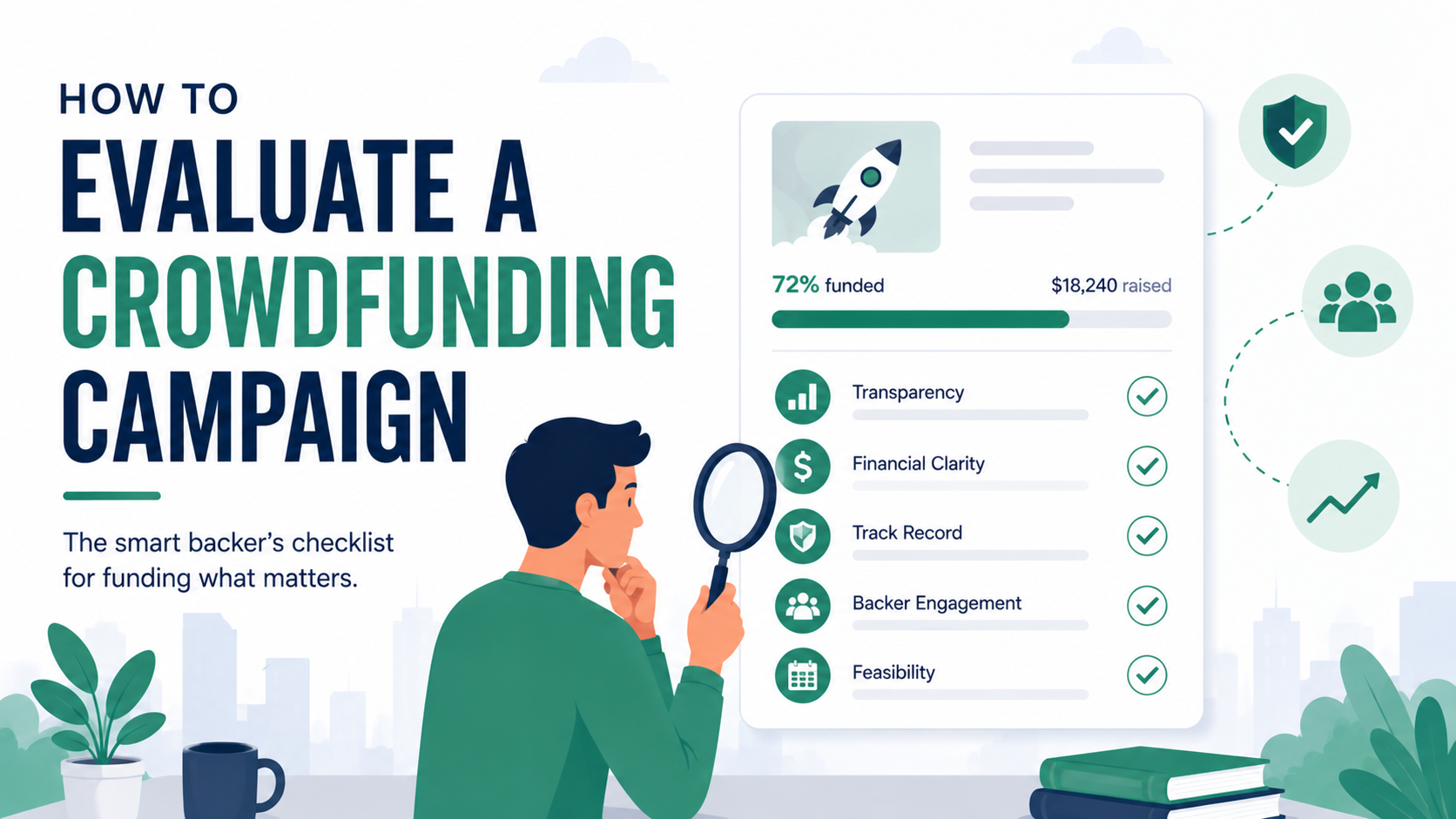
How to Evaluate a Crowdfunding Campaign Before You Back It
Most crowdfunding campaigns tell a good story. A founder shares a problem they've experienced firsthand, explains how their product or software solves it, and presents a funding goal. It reads well. The mockups look polished. The pitch is tight.
But a compelling narrative is not the same as a credible project. Every year, backers lose money on campaigns that raised significant funds, generated real excitement, and then delivered nothing. The problem is rarely outright fraud. More often, it's a creator who genuinely believed they could execute but had no real foundation to stand on.
If you're considering backing a crowdfunding campaign, the question to ask is not "does this seem like a good idea?" The right question is: "what evidence exists that this creator can actually build and ship this?"
Here's a practical framework for answering that.
Start With the Creator, Not the Campaign
The campaign page is marketing material. The creator's track record is signal.
Before reading a single word of the campaign description, look up the person behind the project. What have they shipped before? Do they have a public presence, a GitHub profile, a previous product, or a body of work that shows they can finish things? Competent founders tend to have a trail.
For software and indie dev projects specifically, look for:
- Commit history. Public GitHub activity shows whether someone writes code consistently or in bursts. A project with dozens of commits over several months looks very different from a repo created the week the campaign launched.
- Previous products. Check Product Hunt, Indie Hackers, or App Store reviews. Even failed past products are a better sign than no track record at all. Failure followed by a new attempt suggests iteration. No history suggests speculation.
- Communication style. How does the creator respond to comments and questions? Thoughtful, direct responses signal someone who understands their product deeply. Vague deflections are a warning.
The campaign is a pitch. The person behind it is the actual asset you're funding.
Look for Verifiable Traction, Not Just Claims
A lot of crowdfunding campaigns include metrics: active users, revenue figures, waitlist size, download counts. These numbers are easy to fabricate and almost never verified by the platform hosting the campaign.
When you see a metric, ask whether it can be confirmed independently.
Some signals worth looking for:
- Revenue data. If a creator claims monthly recurring revenue, is it tied to a real payment processor? Self-reported MRR is a claim. MRR pulled directly from Stripe or another payment platform and displayed on the campaign page is evidence.
- Active users. User counts from analytics tools are more credible than unattributed figures in a paragraph. If the creator shows a live analytics dashboard, or connects their campaign to a verified source, that's a meaningful difference.
- Code activity. Public repositories with recent, consistent commit history show active development. An empty or abandoned repo tells you something too.
The gap between claimed metrics and verified metrics is often where disappointment lives. Platforms like Fundl take a direct approach to this: creators connect their Stripe account and GitHub repository to their campaign page, so the figures backers see come from the actual source rather than from whatever the creator typed into a text field.
That kind of structural verification isn't the norm in crowdfunding. When you find it, it changes the quality of your decision.
Red Flags That Should Give You Pause
Not every warning sign is obvious. Some campaigns are well-produced and still deserve skepticism. Here are patterns worth noting:
The timeline is too clean. A creator who promises a fully featured product in three months, with no previous beta or prototype, is almost certainly underestimating what it takes to build. Experienced builders tend to give longer, messier estimates because they've been surprised before.
No working prototype. A video of a mockup is not a demo. If a software campaign has no link to a working version, even a rough one, that's a gap worth noting. Hardware campaigns are harder to evaluate here, but a 3D render is different from a physical prototype.
The funding goal seems arbitrary. Strong campaigns show a breakdown: what the money covers and why that amount is sufficient. A round number with no explanation ("we're raising $50,000 to build our platform") is a signal that the creator hasn't thought carefully about execution costs.
Frequent updates that say very little. Regular campaign updates are a good sign in principle. Updates that are consistently vague, full of enthusiasm but light on specifics, can indicate a creator managing perception rather than reporting progress.
The community is one-directional. Watch the comment section. A creator who only posts but doesn't engage with backer questions is telling you something about how they'll behave after they have your money.
Questions Worth Asking Before You Fund
It's reasonable to send a message to a creator before backing their campaign. Most platforms allow it, and a creator's willingness to respond is itself useful data.
A few direct questions:
- What is the current state of the product? Is there a build I can try?
- What is the biggest technical risk in delivering this on time?
- How many people are working on this, and what are their relevant backgrounds?
- What happens if you hit 50% of your funding goal? Do you still ship?
- Where can I see your current user or revenue numbers independently?
A creator who answers these questions directly, including the uncomfortable ones, is demonstrating the same accountability they'll need to actually run a project. A creator who deflects or responds with polished marketing language is showing you their default mode under pressure.
What Accountability Actually Looks Like
Crowdfunding works best when both sides of the transaction are honest about what they know and don't know. Backers accept risk in exchange for early access, a lower price, or the satisfaction of helping something get made. Creators accept accountability in exchange for funding before they've fully built the product.
The problem is that traditional crowdfunding platforms apply almost no structural pressure on creators to be honest. Campaign pages are largely unmoderated. Metrics are self-reported. Updates are voluntary. The accountability that should exist is mostly theoretical.
This is changing, slowly. The most credible campaigns today are the ones where creators proactively surface their real numbers: actual code commits, real revenue, live user data. Not because a platform requires it, but because they understand that trust is the actual product they're selling.
Platforms built around verified metrics are a direct response to this gap. When a campaign page shows live data pulled from real sources, backers can make a decision based on evidence rather than presentation. That doesn't eliminate risk. But it changes the quality of the bet.
The Takeaway
Backing a crowdfunding campaign is a judgment call, not a transaction. You're deciding whether a person, not just an idea, can be trusted to do what they've said they'll do.
The best way to make that call is to look past the campaign page. Study the creator's history. Demand verifiable evidence for any metric that matters. Ask direct questions and pay attention to how they're answered. Watch for the gap between what a campaign presents and what it can prove.
Good projects don't need to hide anything. Creators with real traction tend to want backers to see it.
If you're looking for a crowdfunding platform that takes data verification seriously, Fundl is built specifically around this idea — connecting creator metrics directly to the campaign page so backers see source-verified numbers before they fund.